

 Español



The Mechanism Behind Blue Light Blocking Coating
Blue light blocking coatings for single vision lenses operate through two distinct technical approaches: reflective interference coatings and absorptive coatings.
Reflective blue light blocking coatings function by depositing multiple thin-film layers onto the lens surface. These layers are engineered to exploit thin-film interference, selectively reflecting electromagnetic radiation in the high-energy visible (HEV) range, approximately 380nm to 450nm. The coating thickness is precisely controlled at the nanometer scale, and the number of layers directly determines the blocking efficiency. This approach leaves the lens substrate chemically unchanged.
Absorptive blue light blocking coatings embed specific chromophores or UV-blue absorbing compounds either within the lens substrate itself or within the hard coat layer applied prior to anti-reflective treatment. Rather than reflecting short-wavelength light, these coatings convert the absorbed energy into heat at a molecular level. The two approaches differ substantially in their downstream impact on transmittance curves and color fidelity, a distinction that carries real consequences for different categories of single vision lens wearers.
Quantified Impact on Light Transmittance
A standard clear single vision lens without specialty coatings achieves visible light transmittance values between 92% and 99%, depending on substrate refractive index and the number of anti-reflective layers present. The introduction of blue light blocking coating produces wavelength-selective transmittance changes rather than a uniform reduction across the visible spectrum.
Within the 380nm to 450nm range targeted by most blue light blocking coatings, reflective designs can reduce transmittance in that specific band by 20% to 40%. High-blocking variants marketed to heavy screen users may achieve over 50% attenuation in the peak HEV range. Across the broader visible spectrum from 450nm to 780nm, well-engineered reflective blue light blocking coatings maintain transmittance reductions below 1% to 2%, meaning the perceptible brightness of the visual field under normal photopic conditions remains effectively unchanged for most wearers.
Absorptive coating designs present a different transmittance profile. Because absorbing compounds tend to have broader spectral absorption bands, the overall visible light transmittance of the finished single vision lens may decrease by 2% to 5% compared to an equivalent lens without blue light protection. In low-luminance environments — dim office lighting, evening reading, or poorly lit indoor settings — wearers may notice a subjective reduction in perceived brightness. This factor warrants attention when selecting blue light blocking coating options for patients whose primary environments involve subdued artificial lighting.
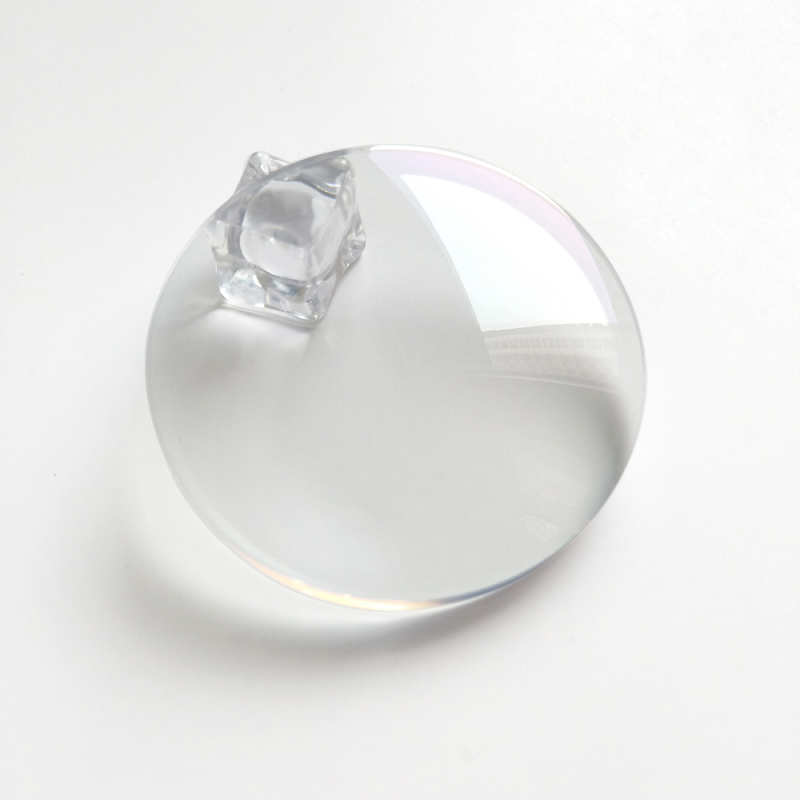
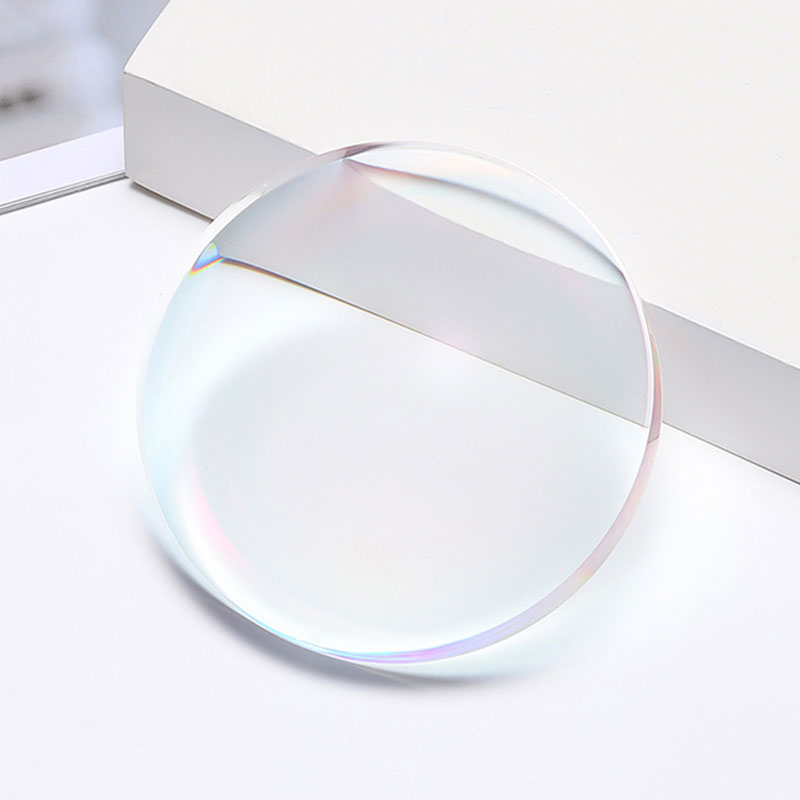
One visually conspicuous characteristic of reflective blue light blocking coating is the residual surface reflection it produces. Unlike standard anti-reflective coatings engineered to minimize all surface reflections, blue light blocking AR stacks intentionally allow blue-violet wavelengths to reflect. This manifests as a characteristic blue or blue-purple sheen visible on the front surface of the lens. The intensity of this reflection correlates directly with the coating's blocking efficiency — higher attenuation of blue light produces a stronger and more visually prominent surface reflection. Patients should be informed of this optical characteristic prior to dispensing to manage expectations.
Effects on Color Rendering and Color Accuracy
Color rendering accuracy in ophthalmic lenses is evaluated through spectrophotometric analysis, with results expressed as color coordinate shifts within established color space models such as CIE 1931 XYZ or CIELAB. Blue light blocking coating introduces measurable deviations in color perception that follow predictable optical principles.
Because the coating selectively attenuates short-wavelength blue light before it reaches the retina, objects viewed through the lens undergo a warm color shift. Blue-toned and violet-toned surfaces appear less saturated to the wearer. White fields — including digital displays, printed documents, and white-painted surfaces — may carry a subtle warm or yellowish cast, most apparent when comparing corrected and uncorrected vision side by side or when switching between a coated and uncoated lens.
In CIE color coordinate terms, single vision lenses with blue light blocking coating typically produce color shifts ranging from 0.003 to 0.012 units along the yellow-red axis. For wearers with normal trichromatic color vision engaged in general daily activities, shifts within this range fall below the threshold of conscious detection. The human visual system's chromatic adaptation mechanisms compensate for moderate color shifts quickly, particularly under broadband illumination such as daylight.
However, specific professional groups require more careful consideration. Graphic designers, prepress and print production specialists, colorists in the textile and fashion industries, painters, and any other practitioners who depend on accurate color discrimination for their work may find that blue light blocking coating introduces unacceptable deviation from reference color standards. For these patients, the trade-off between blue light attenuation and color fidelity should be discussed explicitly, with the option of reserving blue light blocking single vision lenses for non-critical screen use and maintaining a standard AR-coated pair for color-critical tasks.
Absorptive blue light blocking coatings, particularly those that incorporate a yellow-tinted substrate or hard coat, produce more pronounced color shifts than reflective designs at equivalent blocking rates. The warm color bias is more consistent across illumination conditions and may be noticeable even after the initial adaptation period. Patients with color vision deficiencies, who may already experience challenges distinguishing certain hues, should be assessed carefully before these products are recommended.
Abbe Number, Chromatic Aberration, and Coating Interactions
The Abbe number of a single vision lens substrate governs its dispersion characteristics — the degree to which the lens separates light of different wavelengths as it refracts through the material. Blue light blocking coating does not alter the Abbe number of the base substrate. The lens material's intrinsic chromatic aberration behavior remains unchanged by the application of a surface coating.
Nevertheless, the thin-film interference effects produced by reflective blue light blocking coating stacks introduce wavelength-selective phase changes at the lens surface. In high-power single vision lenses where lateral chromatic aberration is already significant in peripheral gaze zones, a small number of wearers have reported perception of colored fringing or iridescent artifacts when viewing high-contrast edges at oblique angles through the lens periphery. This phenomenon is most associated with aggressive high-blocking reflective coating designs and is rarely reported with moderate-blocking products.
Performance Variation Across Visual Environments
The perceptual impact of blue light blocking coating on single vision lens wearers is not constant across environments. Illumination spectrum, luminance level, and the primary light source type all influence how significantly the coating alters color perception.
Under broad-spectrum natural daylight, which distributes energy relatively evenly across the visible wavelengths, the selective attenuation of the blue-light band by the coating is partially masked by the richness of the remaining spectrum. The visual system adapts readily, and color rendering under daylight conditions through a moderately rated blue light blocking lens is considered clinically acceptable for most applications.
Under narrow-spectrum LED lighting — which dominates contemporary office environments, retail spaces, and residential settings — the situation changes. Modern white LED sources generate a pronounced emission peak centered near 450nm, which falls squarely within the primary attenuation band of blue light blocking coating. In these environments, the coating's effect on the perceived spectrum is more substantial, and color rendering deviations become more perceptible, particularly for wearers in transitions from natural to artificial light conditions.
Night driving presents a specific clinical consideration. Traffic signal systems and modern automotive lighting increasingly rely on blue-white LED sources. High-attenuation blue light blocking coatings applied to single vision lenses worn during night driving may reduce the perceived brightness of blue-spectrum signals and lower mesopic contrast sensitivity. Patients who drive frequently after dark should be counseled on this potential effect, and moderate-blocking coating designs are generally more appropriate for this population than maximum-blocking variants.
Key Optical Parameters for Evaluating Blue Light Blocking Coatings
Professional evaluation of blue light blocking coating products for single vision lenses should encompass four primary optical parameters: blue light blocking rate across the HEV band, overall visible light transmittance, color coordinate shift magnitude, and residual surface reflection characteristics.
Products achieving a blue light blocking rate of 20% to 35%, maintaining visible light transmittance above 96%, and producing color coordinate shifts below 0.005 units represent a practical balance between protective function and optical neutrality. These specifications allow single vision lens wearers to benefit from meaningful HEV attenuation without incurring clinically significant reductions in transmittance or color accuracy under standard-use conditions.
Practitioners fitting single vision lenses with blue light blocking coating should conduct a thorough needs assessment that accounts for the patient's occupational visual demands, primary lighting environment, habitual screen exposure duration, and sensitivity to color rendering accuracy. Prescribing blue light blocking coating based solely on blocking rate maximization, without regard for the transmittance and color rendering implications outlined above, risks delivering a lens that compromises the very visual performance it is intended to support.