

 Español



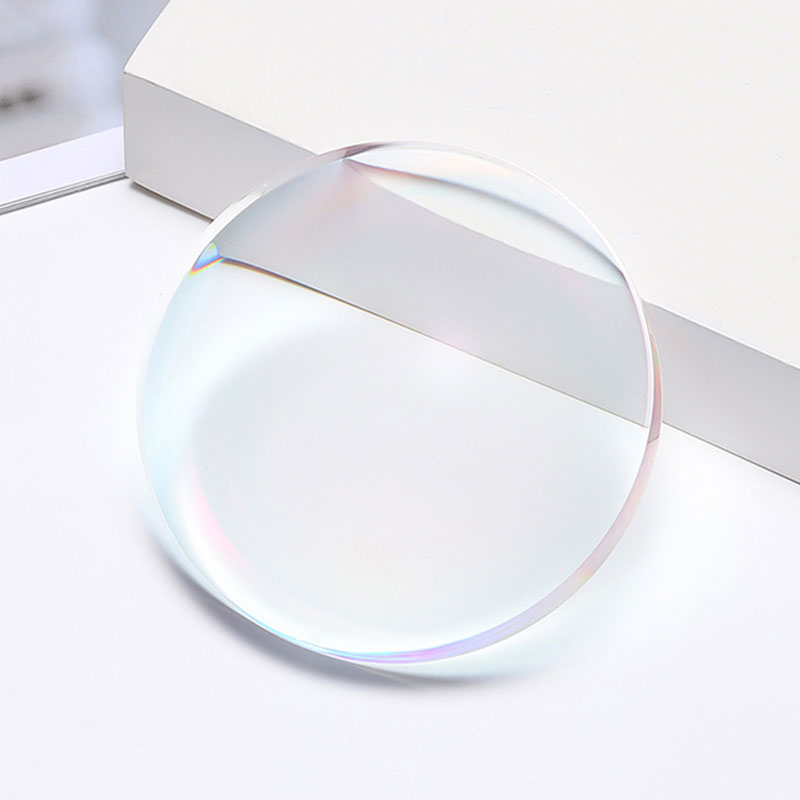
In the field of modern vision health, the iteration of optical technology continuously redefines people's perception of visual clarity and wearing comfort. Whether it is lenses used for daily spectacle frames or contact lenses that directly fit the surface of the eye, the core lies in the balance between material physical properties and optical parameters. From a professional optometry perspective, a deep understanding of the core technical indicators of optical lens, eye glass lenses, and optical contact lenses is the cornerstone of scientifically choosing a vision correction solution.
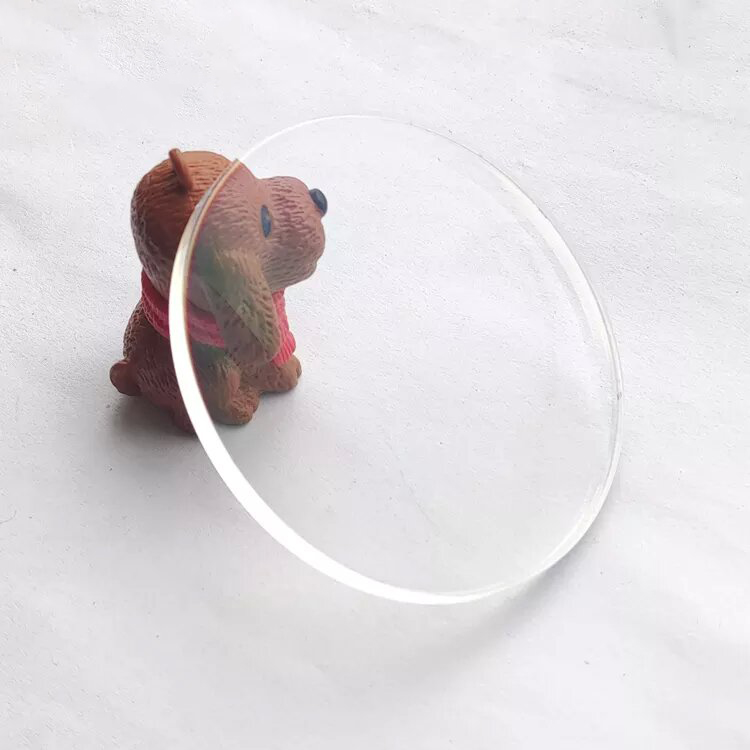
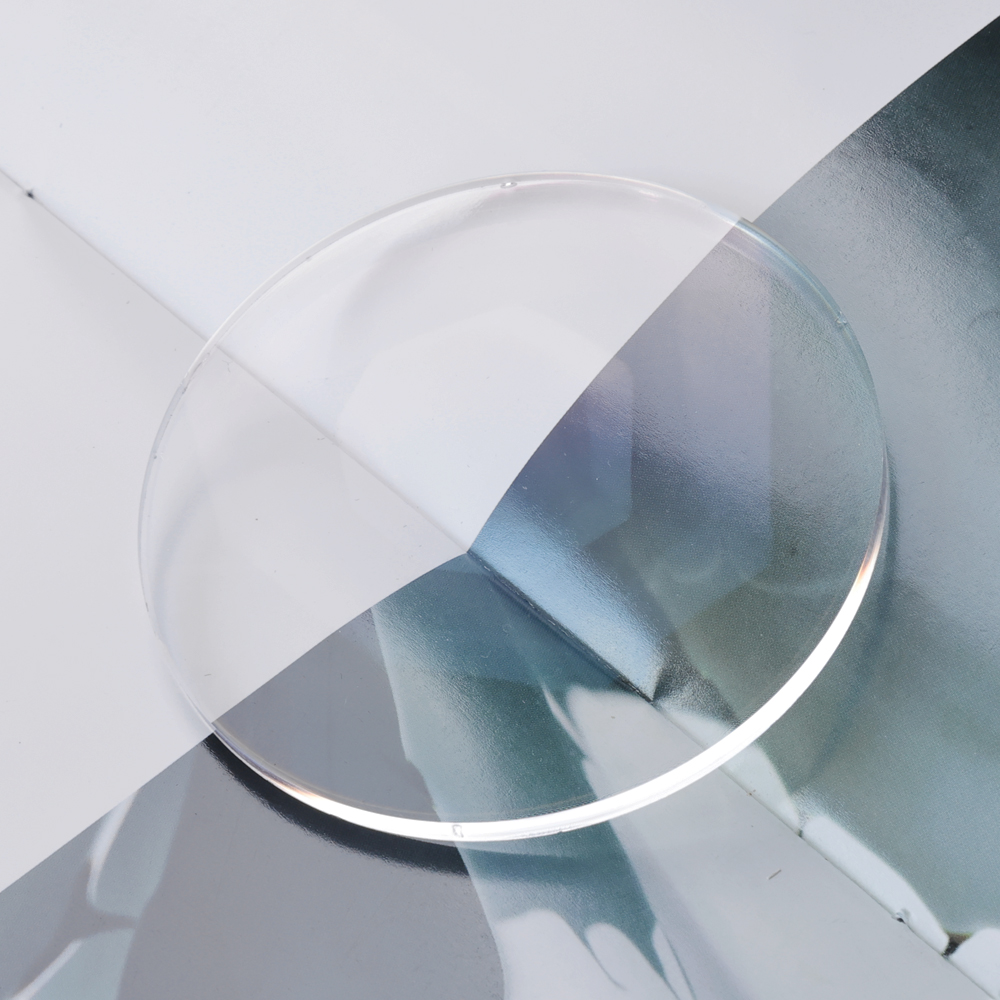
Modern Geometrical Optics and the Design Core of optical lens
As the foundation of all vision correction equipment, the refractive efficiency and light path control capability of an optical lens directly determine the imaging quality. In the field of professional optics, the performance of a lens depends not only on its refractive power, but also on the geometric design and Abbe Number of the lens surface.
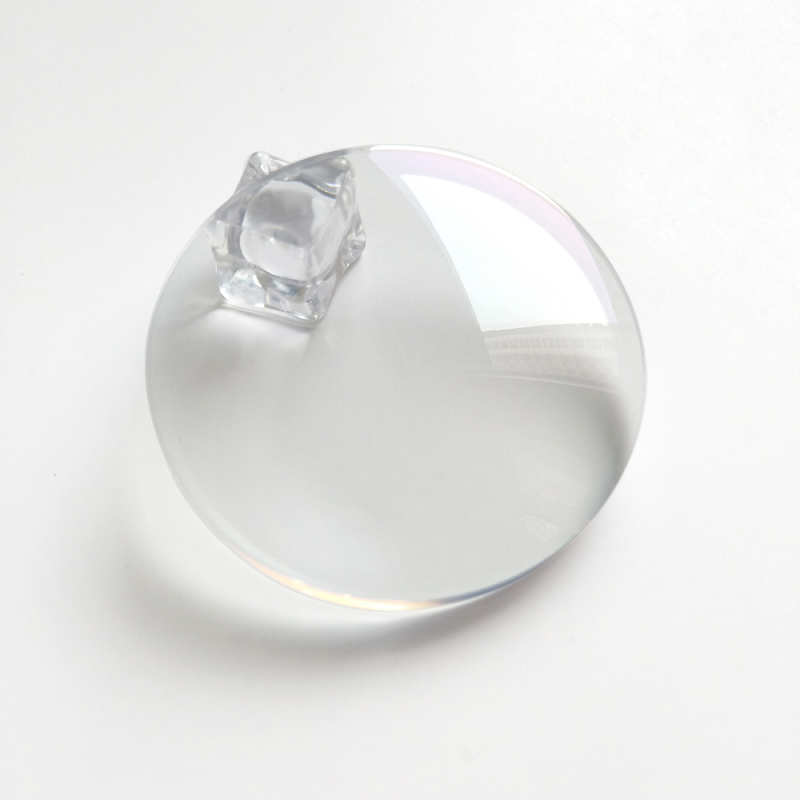
Traditional optical lenses mostly adopt a spherical design, which provides clear imaging in the central area of the lens but easily generates peripheral aberrations and distortion in the edge areas. To overcome this optical defect, modern aspheric and free-form designs have been widely applied. By precisely adjusting the curvature of the lens edge, an aspheric optical lens can effectively eliminate peripheral chromatic dispersion, making the field of view wider and more realistic. In addition, as the Abbe number is an important parameter to measure the degree of light dispersion of a lens, a higher value means fewer rainbow-like fringes (chromatic aberration) at the edge of the lens, resulting in a purer visual quality.
Spectacle Lenses: Material Properties and Key Parameter Comparison of eye glass lenses
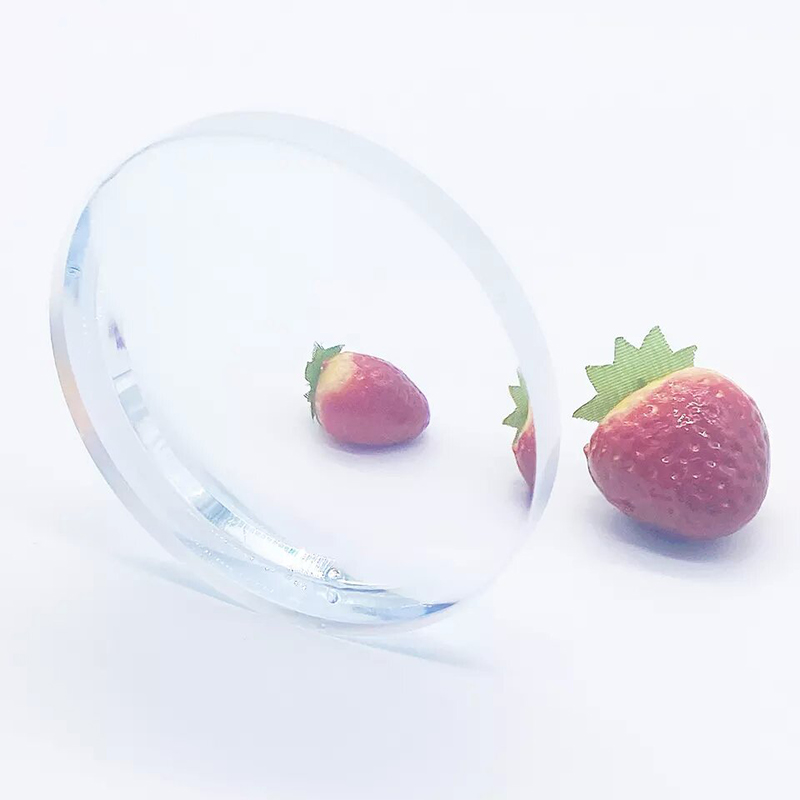
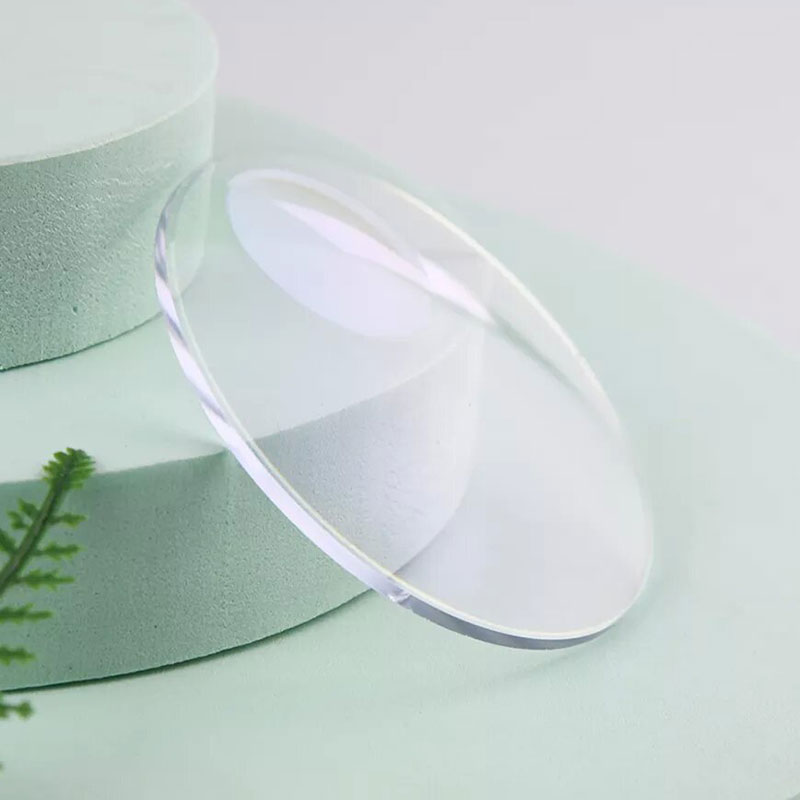
For users who rely on spectacle frames for a long time, the physical performance of eye glass lenses directly affects the comfort of all-day wear. The key parameters to measure the quality of such lenses include: Refractive Index, Abbe number, impact resistance (density), and the blocking rate of harmful light.
Currently, mainstream eye glass lenses have completed a comprehensive evolution from traditional inorganic glass to high-molecular polymer materials. To help clearly and intuitively understand the technical differences between different materials, the parameter comparisons of the core materials in the current industry are listed below:
| Material Name | Refractive Index | Abbe Value | Density (g/cm3) | Impact Resistance Performance | Applicable Diopter Range |
| CR-39 (Standard Resin) | 1.50 | 58 | 1.32 | Normal | Low myopia/hyperopia (less than or equal to plus/minus 2.00 D) |
| Polycarbonate (PC) | 1.59 | 32 | 1.20 | Extremely High (Explosion-proof) | Medium myopia, sports and children eyewear |
| High Refractive Index Resin (1.67) | 1.67 | 32 | 1.35 | Good | Medium to high myopia (plus/minus 4.00 D to plus/minus 6.00 D) |
| Ultra-High Refractive Index Resin (1.74) | 1.74 | 33 | 1.47 | Good | High myopia (greater than or equal to plus/minus 6.00 D) |
The data comparison in the table shows that materials with a higher refractive index can make eye glass lenses thinner under the same prescription power. This effectively solves the problem of thick lens edges and pressure on the nose bridge for patients with high prescriptions. However, an increase in the refractive index is often accompanied by a decrease in the Abbe number. This requires that in actual optical processing, advanced multi-layer anti-reflective coatings must be added to compensate for light transmittance, thereby ensuring visual quality when driving at night or facing digital screens.
Contact Lens Technology: Oxygen Permeability and Moisture Retention Mechanisms of optical contact lenses
Unlike spectacles placed in front of the eyes, optical contact lenses float directly on the tear film on the surface of the cornea. This special wearing environment requires that its design core must consider not only optical correction but also the physiological metabolism needs of the cornea. Since the cornea itself has no blood vessels, more than 90% of the oxygen it needs comes from the air. Therefore, the oxygen permeability coefficient (Dk) and oxygen transmissibility (Dk/t) of optical contact lenses are key indicators related to eye health.
In terms of materials science, traditional hydrogel materials mainly rely on the water in the lens to conduct oxygen. The physical limitation of this type of material is that although an increase in water content can increase oxygen transmissibility, an excessively high water content will cause the lens to absorb more natural tears on the ocular surface, which in turn aggravates dry eyes; furthermore, the maximum oxygen transmissibility (Dk/t) of hydrogel is usually only between 20 and 40.
To break through this physical limitation, silicone hydrogel materials came into being. Silicone hydrogel introduces fluoro-silicone polymers with extremely high oxygen permeability. Oxygen can penetrate directly to the cornea through the molecular channels inside the material, no longer relying entirely on water. This significantly increases the oxygen transmissibility of optical contact lenses.
The following is a comparison of the physical and chemical parameter characteristics of the two core materials:
Regular hydrogel lens parameter characteristics: Water content is about 50% - 70%, oxygen transmissibility (Dk/t) is about 20 - 35. Due to the soft material, the initial wearing comfort is high, but the continuous wearing time should not be too long, making it suitable for people with sufficient tear secretion.
Silicone hydrogel lens parameter characteristics: Water content is about 30% - 45%, oxygen transmissibility (Dk/t) can be as high as 100 - 160. Its elastic modulus (lens stiffness) is slightly higher, which can effectively maintain the shape of the lens. Since it does not rely on water for oxygen transport, long-term wear is less likely to cause dry eyes, which can better protect the normal aerobic metabolism of corneal cells.