

 Español



Single Vision Lens: A Comprehensive Guide to Vision Correction
Understanding the Single Vision Lens: Definition and Basic Principles
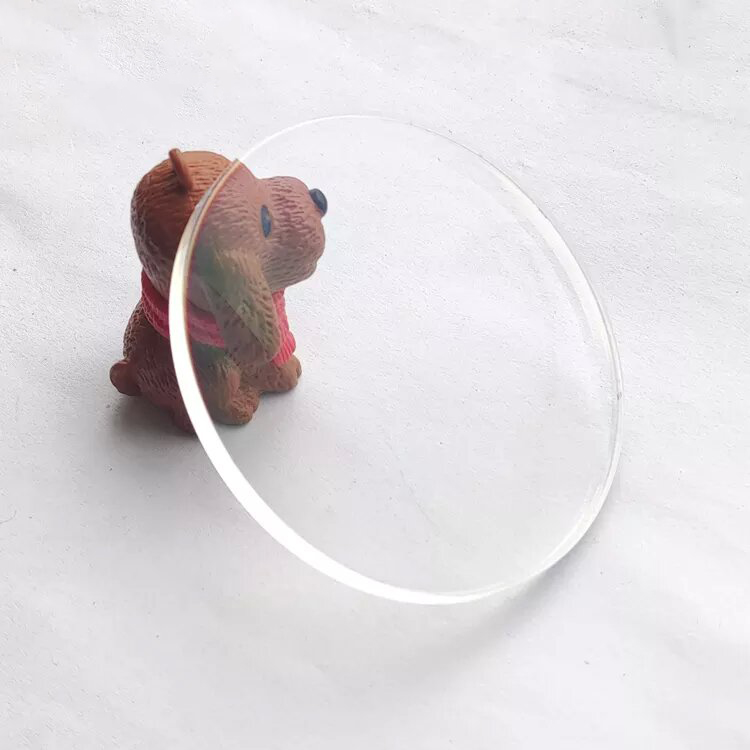
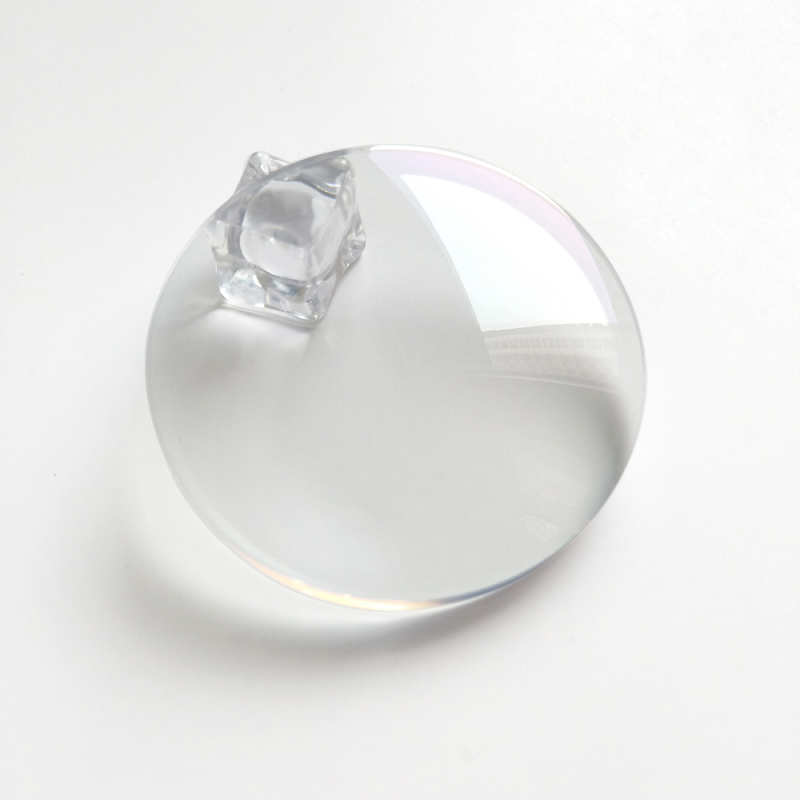
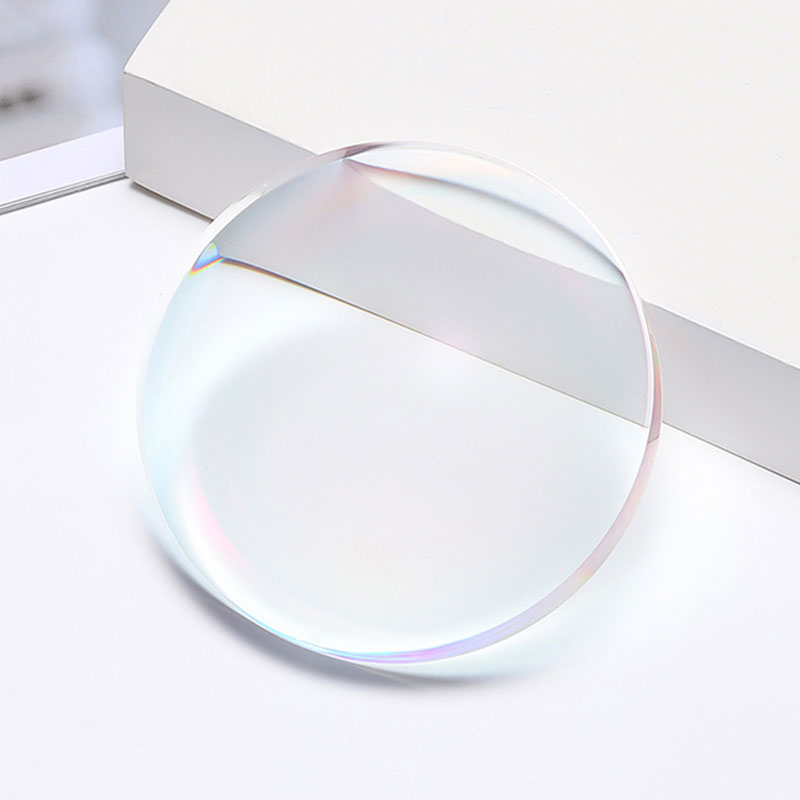
A Single Vision Lens is the most fundamental and widely used type of eyeglass lens in optics. As the name suggests, the entire surface of this lens has a unified optical prescription, meaning the entire lens has only one single focal point. This ensures that the correction power remains consistent regardless of whether the wearer looks through the center or the edges of the lens.
The Working Mechanism of the Single Vision Lens
In an ideal state of vision, light should focus directly on the retina. However, for individuals with refractive errors, light focuses either in front of or behind the retina. A Single Vision Lens corrects this deviation by altering the refractive path of light:
Reshaping Parallel Light Rays: The lens is designed with specific curvatures to precisely guide light to the fovea centralis on the retina.
Single Focal Point Characteristic: Unlike bifocal or progressive lenses, a Single Vision Lens does not have multiple focal zones. Therefore, the wearer does not need to adjust their head angle to find a clear point of vision.
Parameter Comparison Between Single Vision Lens and Multifocal Lenses
To better understand the uniqueness of the Single Vision Lens, the following table compares it with common multifocal solutions:
| Performance Metric | Single Vision Lens | Bifocal Lens | Progressive Lens |
| Number of Focal Points | 1 (Single field of vision) | 2 (Far/Near) | Infinite (Far/Intermediate/Near) |
| Field of Vision | Consistent throughout the lens | Divided into two distinct zones | Includes three transition zones |
| Physical Appearance | Smooth and integrated surface | Visible dividing line or window | Smooth surface, no visible lines |
| Adaptation Period | Minimal, usually immediate | Short, requires adjusting to jumps | Longer, requires learning eye movement |
| Image Jump | None | Significant (when crossing the line) | None |
| Primary Target Group | Myopia, Hyperopia, Astigmatism | Presbyopia (Far and Near) | Presbyopia (Continuous vision) |
Why the Single Vision Lens is the Global Preferred Choice
The Single Vision Lens is the top choice for most wearers primarily due to its superior visual stability. Because there is no change in power across the lens, it provides the most authentic depth perception and peripheral vision during driving, sports, and daily walking, significantly reducing visual fatigue.
Main Classifications of the Single Vision Lens
A Single Vision Lens has fundamental differences in geometric shape and optical design depending on the type of vision problem it corrects. While they all follow the principle of a single focal point, the treatment for myopia, hyperopia, and astigmatism varies.
Myopia Correction (Nearsightedness)
For myopic patients, light focuses before it reaches the retina. This requires a Single Vision Lens designed as a Concave Lens.
Morphological Characteristics: Thicker at the edges and thinner at the center.
Optical Effect: By diverging light rays, the focal point is moved backward to land accurately on the retina.
Hyperopia Correction (Farsightedness)
In hyperopic patients, the focal point falls behind the retina. For this issue, the Single Vision Lens uses a Convex Lens design.
Morphological Characteristics: Thicker at the center and thinner at the edges.
Optical Effect: By converging light rays, the focal point is moved forward for a clear image.
Astigmatism Correction
Astigmatism occurs when the cornea or lens is irregularly shaped (oval rather than spherical), causing light to form multiple focal points. In this case, the Single Vision Lens must incorporate a Cylindrical Lens design.
Optical Effect: It increases or decreases refractive power along a specific axis to compensate for corneal asymmetry.
Reading Glasses
Although reading glasses are often viewed as functional eyewear, their core is still a Single Vision Lens.
Application Scenario: Specifically designed for near-distance tasks (30-40 cm), the entire lens is set to the near-power prescription.
Performance Parameter Comparison for Different Correction Needs
The table below shows the primary differences in optical parameters and morphology for a Single Vision Lens based on various visual needs:
| Correction Type | Lens Type | Prescription Symbol (SPH/CYL) | Edge Thickness | Center Thickness | Visual Effect |
| Myopia | Concave | Negative (e.g., -3.00D) | Thicker | Thinner | Minimizes image |
| Hyperopia | Convex | Positive (e.g., +3.00D) | Thinner | Thicker | Magnifies image |
| Astigmatism | Cylindrical | Includes CYL and Axis | Axis-dependent | Uneven | Corrects distortion |
| Reading | Convex | Positive (usually +1.25D+) | Thinner | Thicker | Clears near text |
Single Vision Lens Design for Complex Prescriptions
In modern optics, to make a Single Vision Lens more aesthetically pleasing when correcting high prescriptions or high astigmatism, Aspheric designs are often introduced. Compared to traditional spherical lenses, an aspheric Single Vision Lens significantly reduces visual distortion at the edges and makes the lens flatter and thinner overall.
Key Materials Affecting Single Vision Lens Performance
When choosing a Single Vision Lens, the material determines the thickness, weight, clarity, and durability. Optical technology has evolved from traditional glass to various high-tech synthetic resins.
Refractive Index
The refractive index measures the ability of a Single Vision Lens to bend light. The higher the index, the stronger the light-bending capability, meaning the lens can be made thinner for the same prescription.
Standard Index (1.50): Suitable for low prescriptions.
Mid-to-High Index (1.56 - 1.61): Balances thickness and optical quality for moderate refractive errors.
High Index (1.67 - 1.74): Extremely thin and light, the first choice for high myopia or hyperopia to reduce pressure on the nose bridge.
Abbe Value
The Abbe value measures the degree of chromatic aberration (color dispersion) of a material.
High Abbe Value: Low dispersion, resulting in higher visual clarity.
Low Abbe Value: Prone to rainbow edges at the periphery of the lens, affecting visual realism.
Generally, as the refractive index of a Single Vision Lens increases, the Abbe value tends to decrease, requiring a balance between thinness and visual quality.
Comparison of Common Lens Materials
| Material Name | Refractive Index | Abbe Value | Impact Resistance | Primary Advantage | Target Group |
| Standard Resin (CR-39) | 1.50 | 58 | Fair | Excellent clarity, affordable | Low RX, budget-conscious |
| Mid-Index Resin | 1.56 | 36-38 | Fair | Thinner than 1.50, cost-effective | Light/Moderate RX |
| Polycarbonate (PC) | 1.59 | 30 | Excellent | High impact resistance, light | Athletes, children, rimless |
| MR-8 (High Index) | 1.60 | 41 | Strong | Toughness, balance of clarity | Moderate RX, durability |
| MR-7 / MR-10 | 1.67 | 32 | Strong | Significantly reduces thickness | High RX |
| Ultra-High Index | 1.74 | 33 | Fair | Thinnest resin option available | Very high RX |
Recommended Matching of Material and Prescription
To achieve the best visual effect and aesthetics for a Single Vision Lens, consider the following matching guide:
Low Prescription (0 to ±2.00D): A 1.50 index is sufficient.
Moderate Prescription (±2.25D to ±4.00D): 1.56 or 1.60 index is recommended for better aesthetics.
High Prescription (±4.25D to ±6.00D): 1.60 or 1.67 index effectively reduces edge thickness.
Very High Prescription (Over ±6.00D): Consider 1.67 or 1.74 index paired with an aspheric design.
Enhancing the Single Vision Lens Experience with Coatings
While a basic Single Vision Lens corrects vision, the bare surface is prone to reflections, scratches, and dirt accumulation. By vacuum-depositing multiple layers of special films on the Single Vision Lens surface, one can significantly improve visual quality and durability.
Anti-Reflective Coating (AR Coating)
This is the core additive layer for a Single Vision Lens.
Principle: Uses destructive interference to reduce light reflections on both sides of the lens.
Benefits: Increases light transmission, eliminates glare and ghost images during night driving, and allows others to see your eyes clearly.
Hard Coating (Scratch Resistance)
Since resin Single Vision Lens materials have lower hardness, they scratch easily.
Function: Forms a high-hardness protective film to increase wear resistance.
Importance: Essential for high-index lenses, which are generally softer materials.
Super Hydrophobic Coating
Usually applied as the outermost layer of the Single Vision Lens.
Characteristics: High contact angle prevents water, oil, and fingerprints from adhering.
Advantages: Easier to clean; fog dissipates faster during rain or temperature changes.
Blue Light Blocking Technology
Designed for modern digital lifestyles.
Method: Filters high-energy short-wave blue light through base material absorption or surface reflection.
Application: Ideal for Single Vision Lens wearers who spend long hours in front of screens to relieve eye strain.
Performance Comparison of Common Coatings
| Coating Type | Light Transmission | Reflectance | Surface Hardness | Hydrophobicity | Visual Advantage |
| Uncoated | 91-92% | 8-9% | Low (1H-2H) | Poor | Low cost, high glare |
| Hard Coat (HC) | 92% | 8% | Mid (3H-5H) | Poor | Extends lens life |
| AR Combo (HC+AR) | 98.5-99.2% | lower than 1% | High (6H-8H) | Fair | Clear vision, no glare |
| Full Protection | higher than 99% | lower than 0.5% | Very High (8H+) | Excellent | Easy clean, top tier |
| Blue Cut (BC) | 95-97% | 2-3% | High | Excellent | Filters blue light |
Determining if You Need a Single Vision Lens
Choosing between a Single Vision Lens and multifocal lenses depends on your visual needs, age, and complexity of vision issues.
Target Groups and Core Needs
The Single Vision Lens is designed to provide the clearest vision for a single distance. It is best for:
Teens and Students: Usually only require myopia or astigmatism correction with a stable, full-screen field of view.
Adults Under 40: Strong eye accommodation allows one Single Vision Lens to cover far, intermediate, and near distances.
Specialized Occupations: Such as full-time drivers (Far-focus) or precision repair technicians (Near-focus).
Scenario-Based Comparison
| Scenario | Single Vision Lens | Progressive Lens | Conclusion |
| Night Driving | Excellent: Wide field, no distortion. | Good: Possible peripheral sway. | Far-Single Vision is safer. |
| Deep Reading | Superior: Full lens is reading power. | Fair: Narrow reading zone. | Use Single Vision Readers. |
| Dynamic Sports | Excellent: Accurate depth perception. | Fair: Disturbed by swim effect. | Single Vision for sports. |
| Multitasking | Poor: Requires switching glasses. | Excellent: One pair for all distances. | Progressives for office work. |
| Graphic Design | Excellent: No line distortion. | Limited: Aberrations at the sides. | Single Vision for precision. |
Optical Parameter Indicators
Field of View Rate: A Single Vision Lens offers nearly 100% effective field of view, while progressive lenses offer only 30% to 60% in the clear corridor.
Distortion Index: A Single Vision Lens has extremely low distortion (lower than 2%) across the lens, whereas multifocal lenses can reach 10% to 15% at the periphery.
Professional Advice for Purchasing a Single Vision Lens
Purchasing a Single Vision Lens is about matching optical performance with wearing comfort.
Core Metric: The Importance of Pupillary Distance (PD)
When processing a Single Vision Lens, the optical center of the lens must align with the wearer’s pupil center.
Accurate Alignment: Ensures light passes without deviation for the clearest view.
Impact of Error: Misalignment causes an unwanted prism effect, leading to eye strain, dizziness, or double vision.
Relationship Between Frame Selection and Lens Thickness
Frame shape and size directly affect the final look of the Single Vision Lens, especially for high prescriptions.
Small Frame Principle: Smaller frames remove more of the thick outer edges of the lens, making the final Single Vision Lens thinner.
Shape Advice: Round or oval frames distribute edge thickness more evenly than large square frames.
Key Purchase Parameter Comparison Table
| Factor | Low RX (0D to ±2.00D) | Moderate RX (±2.25D to ±5.00D) | High RX (±5.25D+) |
| Recommended Index | 1.50 or 1.56 | 1.60 or 1.67 | 1.67 or 1.74 |
| Lens Design | Spherical is fine | Aspheric suggested | Double Aspheric required |
| Frame Size | Flexible | Medium (lower than 52mm width) | Small (lower than 50mm width) |
| Frame Material | Any | Lightweight metal/acetate | Titanium or thick rim |
| PD Accuracy | Within ±2.0mm | Within ±1.0mm | Must be 100% precise |
Optimizing Point of Wear
Even a perfect Single Vision Lens underperforms if positioned incorrectly. Three physical parameters are vital:
Vertex Distance: The distance from the back of the lens to the cornea (standard is 12-14mm). Changes alter effective power.
Pantoscopic Tilt: The inward tilt of the frame (usually 8-12 degrees), affecting vertical optical accuracy.
Wrap Angle: The curvature of the frame. Sport-specific Single Vision Lens designs require optical compensation for high wrap angles.