

 Español



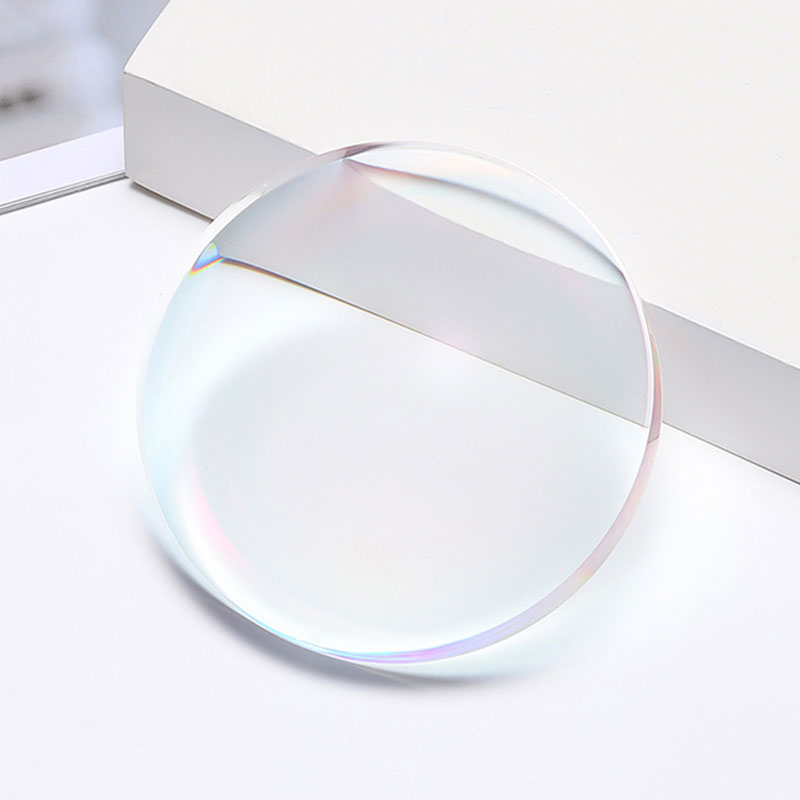
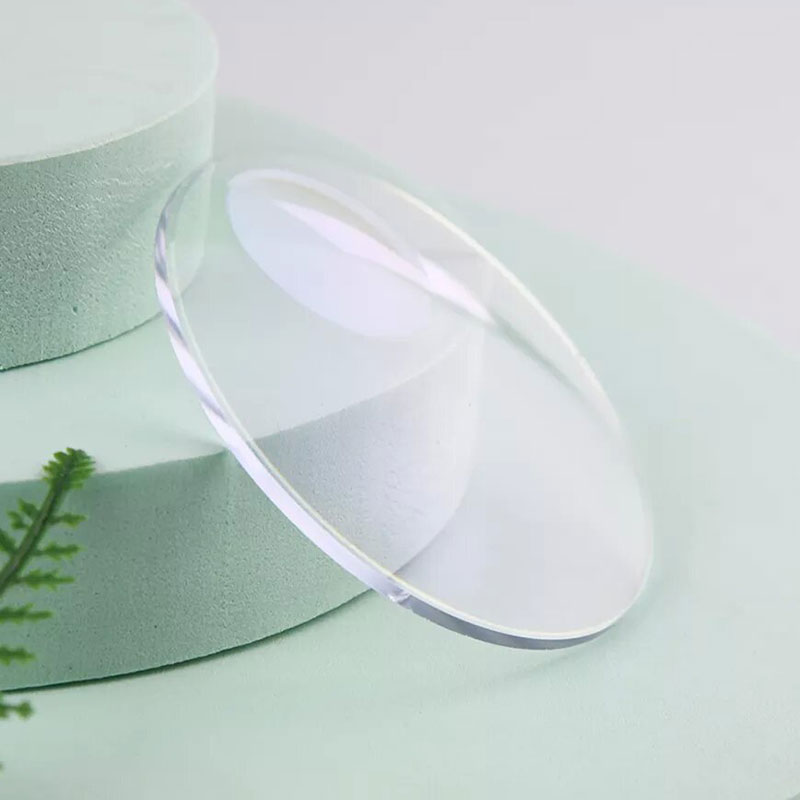
The rapid progression of myopia in children and adolescents has become a major global challenge in the field of eye health. In traditional refractive correction solutions, standard single-vision lenses cannot change the projection state of the peripheral retina, which easily leads to peripheral hyperopic defocus. This indirectly stimulates the excessive elongation of the axial length. With breakthroughs in optical engineering, the Myopia Control Lens based on micro-structure design has become the core optical solution in clinical practice to inhibit axial length elongation and slow down myopia progression.
Through an in-depth analysis of optical defocus theory and retinal feedback mechanisms, the Myopia Control Lens demonstrates solid theoretical support and excellent clinical data.
Core Mechanism of Retinal Peripheral Defocus
During the developmental stage of the human eye, there is a strong instinctive tendency toward emmetropization. When wearing traditional single-vision glasses, although the lens focuses central light accurately on the fovea of the retina, the parallel light passing through the periphery of the lens falls behind the retina due to the spherical shape of the eyeball. This creates peripheral continuous hyperopic defocus.
When the retina receives this signal of focusing behind it, it induces remodeling of the scleral stroma, causing the axial length to extend backward to chase the focus point. This is the primary physical driver behind the continuous increase in myopia prescription.
The design of the Myopia Control Lens completely breaks through this traditional limitation. By utilizing complex surface micro-structures, it focuses the light passing through the edge of the lens in front of the retina, forming peripheral myopic defocus. This optical signal located in front of the retina sends an inhibitory feedback to the eyeball to stop growing backward, thereby blocking the abnormal elongation of the axial length and slowing down the progression of refractive error from the root source.
Parameter Comparison of Mainstream Optical Micro-structure Designs
Currently, modern Myopia Control Lens products applied in clinical practice mainly adopt two precise manufacturing techniques: Defocus Incorporated Multiple Segments (DIMS Design) and Highly Aspherical Lenslet Target (HALT Design). Although they differ in micro-structure arrangement and optical density, their core physical mechanism is to construct a continuous and stable pre-retinal defocus barrier.
The following data shows the target parameters and control efficiency based on large-scale randomized controlled clinical trials:
| Core Evaluation Indicators | Defocus Incorporated Multiple Segments (DIMS Design) | Highly Aspherical Lenslet Target (HALT Design) |
|---|---|---|
| Central Zone Structure | 9mm diameter circular central single-vision zone, providing high-clarity refractive correction | 9mm diameter circular central single-vision zone, ensuring central baseline vision |
| Peripheral Micro-structure Morphology | Ring-array distribution of independent positive micro-lenslets (honeycomb arrangement) | Densely arranged concentric rings of aspherical lenslets (aspherical non-linear design) |
| Add Defocus Parameter | Constantly provides a relative positive power of +3.50 D | Generates a non-linear, high-density multidimensional myopic defocus zone |
| Two-Year Refractive Progression Slowdown Rate | Approximately 52% to 59% | Approximately 60% to 67% |
| Two-Year Axial Length Elongation Slowdown Rate | Approximately 60% to 62% (average reduction of about 0.34 mm) | Approximately 60% to 64% (average reduction of more than 0.30 mm) |
| Daily Visual Adaptation Period | First-time wearers usually require 1 to 3 days for subjective adaptation | First-time wearers usually require 1 to 3 days for subjective adaptation |
Clinical Adaptation and Long-Term Compliance Assurance
In practical applications, the control efficiency of the Myopia Control Lens is closely related to daily wearing habits and prescription accuracy. Optometry experts point out that ensuring the physical geometric center of the lens aligns precisely with the patient pupil center in front of the orbit is key to guaranteeing the stable projection of the peripheral myopic defocus signal.
In addition, the impact resistance of the lens material (such as using polycarbonate or high-performance resin substrates) and the light transmittance directly determine the daily wearing compliance of children. Clinical data confirms that ensuring more than 12 hours of full-time wear daily allows the eyeball to continuously receive the optical inhibition signal, thereby achieving the expected status for myopia control efficiency.
By balancing central clear vision with peripheral therapeutic defocus in lens design, the Myopia Control Lens not only solves the pain point of traditional glasses which only correct but do not control, but also provides scientific eye health protection during the critical refractive development period of adolescents in a non-invasive, highly safe physical manner.