

 Español


A woman in her late forties holds a restaurant menu at arm's length, gives up, and asks the person across the table to read it aloud. Three months later she is sitting in a fitting chair while an optician asks a question that sounds simple and is not: bifocal or progressive?
The honest answer is that neither design is universally better. A flat-top bifocal and a modern freeform progressive solve the same optical problem, presbyopia, with two very different maps of power laid across the lens surface. One hands the wearer a wide, rock-steady reading window and a visible line. The other hands the wearer a smooth, line-free transition, a far more attractive appearance, and a noticeably narrower reading zone that lives or dies on how accurately the lens is measured and fitted.
Which one wins depends on the prescription, the add power, the frame, the wearer's daily tasks, and how much patience that wearer is willing to invest during the first two weeks. This guide works through the optics, the fitting realities, the cost gap, and the practical situations where each design is clearly the stronger choice. It is written from the viewpoint of a lens manufacturer that produces both bifocal and progressive designs across a wide range of materials and indices, so the emphasis stays on the things that genuinely change what a wearer sees when they put the glasses on.
The Short Answer: Add Power, Task Mix and Adaptation Tolerance Decide It
Start with the conclusion. For a first-time presbyope who spends a large part of the day at intermediate distances, such as a computer screen, a car dashboard, a supermarket shelf, a piano keyboard or a workbench, a freeform progressive lens is normally the better long-term investment. It restores a band of vision that a bifocal simply cannot provide, and it does so without a visible line.
For a wearer with a high add power, a strong need for a wide and stable near zone, a high cylinder prescription, or a documented history of failing to adapt to progressives, a flat-top bifocal is frequently the better lens. That is not a compromise or a step backwards. It is the design that gets that particular person seeing comfortably fastest.
Three variables outweigh everything else in the decision:
- Add power. Below roughly +1.75, a progressive corridor stays comfortable, the peripheral swim is mild, and the near zone is wide enough for most reading. Above roughly +2.25, the corridor compresses, the near zone narrows, and the unwanted astigmatism in the periphery becomes much harder to ignore.
- Task mix. If more than a third of the wearing day happens at 50 cm to 70 cm, a bifocal leaves a blind spot exactly where the wearer needs to see. If almost all near work happens closer than 40 cm and the wearer accepts looking down to read, a bifocal is completely adequate.
- Adaptation tolerance. A bifocal is learned in one to three days because the brain only has to learn to jump over one boundary. A progressive typically takes one to two weeks of full-time wear, and the wearer must be willing to keep the glasses on rather than switch back to an old pair every evening.
Price, cosmetics, frame shape and coatings all matter, but none of them override those three points. A beautifully coated progressive that the wearer cannot adapt to is a failed pair of glasses. A plain flat-top bifocal that the wearer loves is a success, whatever the marketing says.
What a Bifocal Lens Actually Does
A bifocal carries two powers on a single lens. The upper portion holds the distance correction, and a small segment in the lower portion holds the near correction, usually with the full add power applied inside it. The two zones meet at a hard boundary, and that boundary explains both the design's greatest strength and its long-standing reputation.
At the segment edge the eye encounters an abrupt change in prismatic effect. This is what wearers describe as image jump, and on a typical flat-top segment the jump sits somewhere in the 1 mm to 3 mm range depending on segment size and add power. The jump is not a defect; it is the arithmetic consequence of placing two powers side by side with a sharp border. The visual system adapts quickly by treating the line as a fixed landmark and skipping over it, which is why bifocals remain the fastest presbyopic design to learn.
The reading zone is the other half of the story. Because the segment is a discrete area with a defined top edge, the near vision inside it is stable and wide. A 28 mm flat-top segment gives a near field that is genuinely generous, especially at higher add powers where a progressive corridor would have narrowed considerably.
Segment shapes and what each one changes
- Flat-top (D-segment). The workhorse of the category. The flat upper edge keeps the jump predictable and low, and the segment is available in widths from roughly 22 mm to 28 mm. Wider segments give a broader near field; narrower segments stay further out of the way for distance vision.
- Round-top. A circular segment produces slightly more jump because the top of the segment is curved, but the round shape can look less industrial in a small frame and works well at moderate add powers.
- Executive or full-width. The segment line runs the full width of the lens. Near vision is enormous and completely stable, but the jump is at its highest and the lens is noticeably heavier and thicker at the bottom. It still has loyal users in reading-intensive occupations.
- Blended. The segment edge is polished away so no line is visible. The trade is a softer transition zone with more distortion, a longer adaptation period, and a smaller usable reading area than a flat-top of the same width.
Segment height drives comfort more than most people expect. Setting the top of the segment too low forces the wearer to tilt the chin down to read; setting it too high drags the line into the distance field and interferes with walking and driving. For wearers who want to weigh the options in more detail, the differences between the main bifocal segment types and their fitting positions are worth reviewing before a frame is chosen.
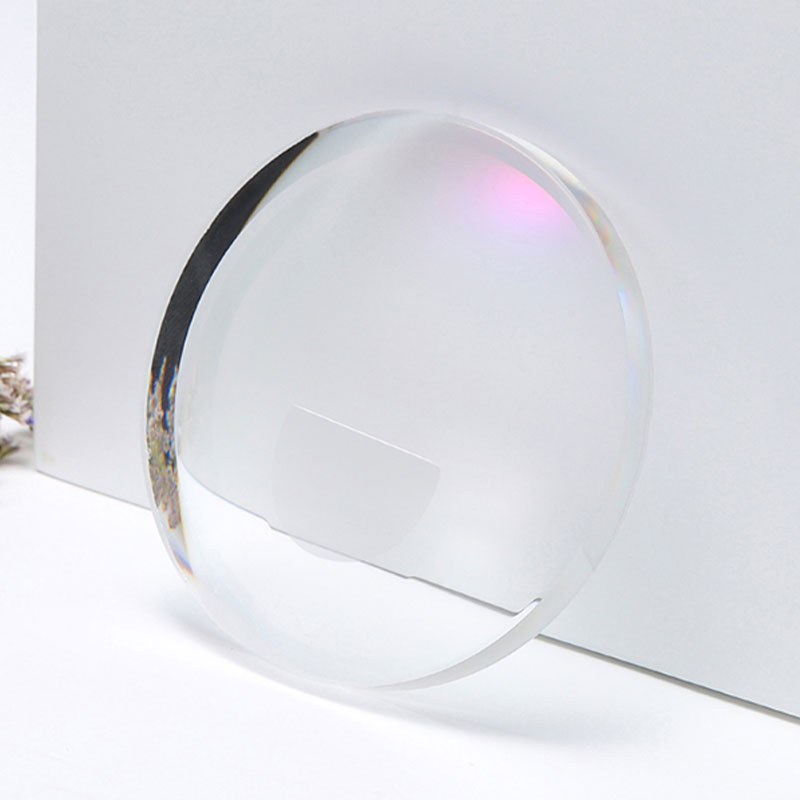 1.56 Bifocal Flat-Top Lens HMCWhen a person loses the ability to naturally change the focus of eyes due to age,you need to look at far and near vision for vision correction respectively, and often ...View Product →
What a Progressive Lens Does Differently
A progressive lens, also called a varifocal or multifocal lens, removes the boundary entirely. Power increases gradually from the distance zone at the top, through an intermediate corridor in the middle, and down into the near zone at the bottom. Because the change is continuous, there is no image jump and no visible line. The wearer shifts their gaze downward and the focus follows.
What the design gives with one hand it takes with the other. The corridor that carries the smooth power change must sit somewhere, and the surface area to either side of it has to absorb the unwanted astigmatism that comes with blending three powers into one continuous surface. Those lateral zones are the source of the peripheral swim, the curved appearance of straight doorframes, and the soft edges that new progressives complain about during the first week.
The corridor, the zones and the power map
Modern progressives are built with freeform or digital surfacing, where the back surface of the lens is calculated point by point for the individual prescription rather than selected from a fixed set of moulds. That approach allows the designer to widen the distance zone, lengthen or shorten the corridor, and push the unwanted astigmatism further into the periphery where it is less likely to be noticed.
The practical numbers behind corridor choice are straightforward. A long corridor, typically 16 mm to 20 mm from fitting cross to near reference, spreads the power change gently and suits a tall frame and a wearer who reads at a desk. A short corridor, typically 12 mm to 14 mm, fits a shallow fashion frame but compresses the transition and can make the near zone feel tighter. Fitting height, pupillary distance, vertex distance and pantoscopic tilt all feed into the calculation, which is why a progressive is only as good as the measurements taken in the room.
Intermediate vision is the clear win. A wearer can read a computer monitor, a GPS screen, a price tag or a hand of cards without tilting the head to find a segment. For anyone whose working day lives at that distance, this alone usually settles the argument.
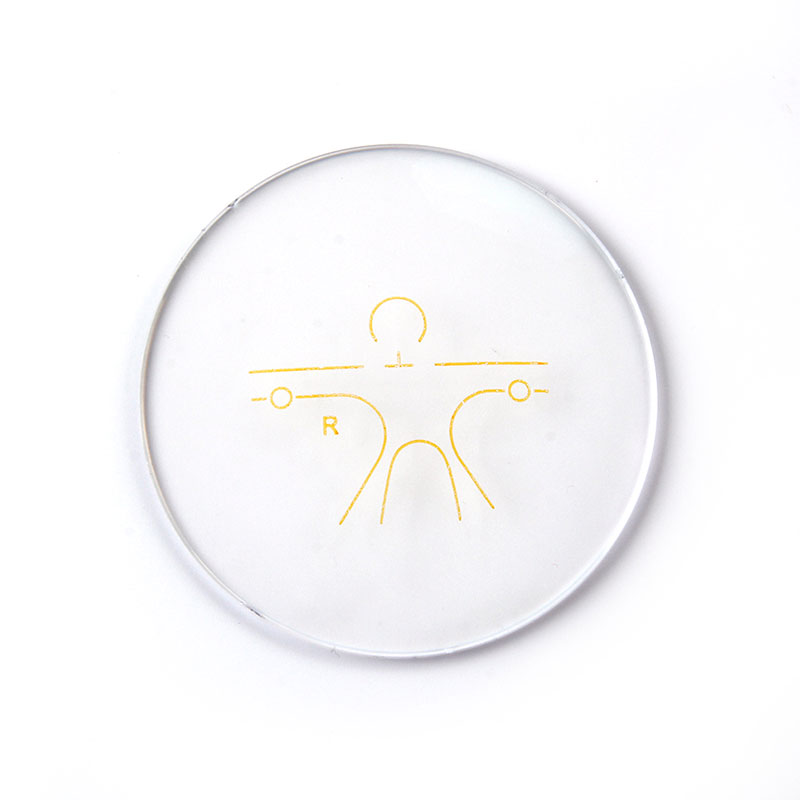 1.56 Progressive Lens HMCProgressive lens is a multi-focal lens, which is different from traditional reading glasses and bifocal reading glasses. Progressive lens does not have the fatigue of ...View Product →
Bifocal vs Progressive: A Direct Comparison
The table below compares the two designs on the factors that wearers actually notice during the first month. Treat the entries as typical values rather than fixed rules, because add power, segment width, corridor length and material all move the numbers.
| Factor | Flat-top bifocal | Freeform progressive | Why the wearer notices |
|---|---|---|---|
| Near zone width | Wide and stable, up to 28 mm across | Narrower, narrowing further as add power rises | Wide reading fields suit long reading sessions and higher add powers |
| Intermediate vision | Essentially absent | Continuous corridor from distance to near | Decides comfort at screens, dashboards and workbenches |
| Image jump at the boundary | Present, typically 1 mm to 3 mm | None | Jump is learned within a day or two but can feel unsettling at first |
| Peripheral distortion | Low outside the segment | Present in the lateral zones and grows with add power | Drives the swim sensation and the need to turn the head rather than the eyes |
| Appearance | Visible segment line | Indistinguishable from a single-vision lens | Cosmetics remain a genuine reason wearers refuse bifocals |
| Adaptation time | One to three days in most cases | Three days to two weeks, dependent on fit quality | Short adaptation keeps a first-time wearer compliant |
| Fitting demands | Segment height and centration | Fitting height, pupillary distance, tilt, vertex distance, frame depth | Progressives punish loose measurement more severely than bifocals |
| Typical cost at retail | Lower | Higher, particularly for freeform designs | Budget shapes the recommendation for many wearers |
| Best suited wearer | High add power, heavy near work, tight budget, previous adaptation failure | Mixed distance work, screen use, cosmetic preference, first-time wearer | Neither design is universally superior |
One pattern stands out across the table. The bifocal wins on optical stability and price, and the progressive wins on range, appearance and intermediate vision. Almost every real recommendation is a trade between those two groups of advantages, weighed against the wearer's habits.
The Numbers Behind Adaptation and Comfort
Adaptation is the factor wearers worry about most, and it is also the one most often misunderstood. The charts below summarise the patterns that appear repeatedly in dispensing experience and in the design literature. They are typical values, not guarantees, because a well-fitted progressive can adapt faster than a poorly fitted bifocal.
Typical adaptation period reported by wearers
Reported comfort on a mixed task set, by week of wear
The two charts tell the same story from different angles. The bifocal delivers usable vision almost immediately, because the brain only has to learn one boundary. The progressive starts lower, because the wearer must build a new habit of pointing the nose at what they want to see, and then overtakes the bifocal once the corridor becomes automatic.
This is why patience matters so much with progressives. A wearer who gives the lens two full days and then swaps back to an older pair each evening never completes the adaptation, and then reports that progressives do not work. Full-time wear for the first week is the single most effective instruction a dispensing professional can give.
When a Bifocal Is Genuinely the Better Choice
There are clear situations where recommending a bifocal is the professional decision, not the budget decision.
- Add power above +2.25. At high add powers the progressive corridor shortens and the near zone narrows sharply. A 28 mm flat-top gives a near field that is simply easier to use all day.
- High cylinder or significant anisometropia. Blended progressive surfaces amplify the differences between the two eyes when the powers diverge. A bifocal keeps each zone optically predictable.
- Heavy, sustained near work. Accountants, tailors, jewellers, watchmakers, proofreaders, and anyone reading printed sheets for hours gains from a stable, wide near zone with no swim.
- Previous adaptation failure. A wearer who has already tried two progressives and returned both is unlikely to succeed on the third attempt without a change of design philosophy.
- Occupational safety and quick-glance tasks. In environments where the wearer must glance down at instruments, gauges or controls, the instant response of a segment is hard to beat.
- Budget-constrained replacement cycles. A bifocal that is replaced without hesitation every year often serves a wearer better than a premium progressive that is stretched for four years.
The most common mistake with bifocals is not the design. It is the segment height. A segment set 2 mm too low turns a comfortable lens into a constant chin-tilt, and the wearer blames the bifocal rather than the measurement.
When a Progressive Is Genuinely the Better Choice
The progressive wins in an equally well-defined set of circumstances.
- A mixed working distance. Office work, teaching, driving, shopping and cooking all sit at intermediate distances where a bifocal offers nothing.
- First-time presbyopes with low add powers. Between +0.75 and +1.75, corridors behave well, near zones stay wide, and adaptation is usually quick.
- Cosmetic sensitivity. A wearer who refuses to see a line in the lens will not wear a bifocal properly, and an unworn bifocal is worse than any progressive.
- Myopia with early presbyopia. A myopic wearer who removes their glasses to read often adapts to progressives unusually well, because they already accept a narrow clear zone in exchange for convenience.
- Occupational and lifestyle designs. Dedicated designs for desk work, driving or younger presbyopes extend the same freeform platform into narrower tasks, which is impossible with a two-zone bifocal.
- Frame choice. Modern shallow frames suit short-corridor freeform designs far better than they suit a large D-segment.
 Office Occupational LensAn excellent lens to wear while working at tasks requiring near and intermediate vision. The design has a wider field of view and more comfortable posture than a fully...View Product →
Six Real-World Wearer Scenarios
Abstract comparisons become concrete quickly when a specific person is sitting in the chair. These six profiles cover most of the cases that arrive at a dispensing counter.
The 46-year-old office manager
Add power around +1.00, eight hours a day across two monitors and a phone. A freeform progressive with a medium corridor handles distance, screen and paperwork without a head-tilt. A bifocal would leave the screens permanently soft.
The 63-year-old accountant
Add power +2.50, four hours of printed ledgers daily. A 28 mm flat-top bifocal delivers a wide, motionless reading field. A progressive at this add power would feel like reading through a keyhole by comparison.
The 52-year-old long-distance driver
Needs sharp road vision, dashboard instruments and a phone mount. A driving-oriented progressive with a widened distance zone and a shifted corridor is the stronger answer than either a standard progressive or a bifocal.
The 41-year-old first-time presbyope
Add power +0.75, mostly computer work, extremely sensitive to anything visible on the lens. A short-corridor freeform progressive with a light add is almost always the right first step, and adaptation is typically a few days.
The 58-year-old jeweller
Works at 25 cm to 35 cm with fine detail for hours. A flat-top bifocal or a dedicated near-vision occupational design outperforms a general progressive, because the intermediate corridor is wasted on this task.
The 49-year-old wearer who failed twice
Two progressive returns, high cylinder, strong preference for stability. A round-top or blended bifocal in a mid-index material is the pragmatic restart, with a progressive retry only after a successful bifocal year.
Material, Index and Coating Choices That Shift the Answer
Design gets most of the attention, but the material and coating package often decides whether the wearer keeps the glasses on. A progressive in the wrong index behaves very differently from the same design in the right one.
Choosing the refractive index
Higher index reduces thickness and weight, which matters for high minus powers, but it also lowers the Abbe number and can introduce more chromatic colour fringing at the periphery. In a progressive, where the wearer already looks through off-axis zones, that trade deserves attention rather than a reflex jump to the thinnest option.
| Index | Material | Typical Abbe number | Best suited to |
|---|---|---|---|
| 1.499 | Standard CR-39 type resin | Around 58 | Low to moderate powers, budget-conscious wearers, excellent optical clarity |
| 1.56 | Mid-index resin | Around 40 | The most common all-round choice for both bifocals and progressives |
| 1.59 | Polycarbonate | Around 30 | Impact resistance for children, sports and safety frames, thinner than 1.56 |
| 1.60 | Mid-high index resin | Around 42 | Good balance of thinness and clarity for moderate to high powers |
| 1.67 | High index resin | Around 32 | Higher minus powers where edge thickness is the main concern |
| 1.74 | Ultra-high index resin | Around 33 | Very high minus powers and rimless frames where weight matters |
Coatings that make or break the experience
A hard coat protects against scratching. A hard multi-coat adds an anti-reflective layer that matters more in a progressive than in a single-vision lens, because reduced reflections keep the peripheral distortion from being exaggerated by stray light. Super hydrophobic multi-coatings add easy cleaning and water repellency, which shortens the time a wearer spends polishing lenses and lengthens the time they spend wearing them.
Photochromic and blue-block options sit on top of that foundation. A photochromic progressive is a strong choice for a wearer who moves between indoors and outdoors all day, while a blue-block progressive suits long screen sessions. Both are available across the mainstream indices, and both keep the progressive advantages of continuous focus while adding light management.
One practical warning: the thicker a high-index progressive becomes, the more important it is to check that the corridor and near zone still sit inside the frame. A short corridor and a well-chosen frame will always beat a premium design squeezed into the wrong shape.
For Optical Professionals and Trade Buyers: What to Verify Before You Commit
When a practice or a distributor selects a supplier for bifocal and progressive lenses, the design name on the box is only one part of the evaluation. The rest sits in the tooling, the surfacing accuracy and the consistency of the coating line.
- Freeform capability and tooling control. Genuine digital surfacing requires in-house optical design, mould development and CNC freeform machining. Suppliers who outsource the back surface lose control over corridor behaviour and repeatability.
- Power and prism tolerance. Ask for the tolerance band applied to sphere, cylinder, axis and prism, and confirm testing against recognised ophthalmic lens standards rather than internal labels.
- Segment and corridor consistency. For bifocals, verify segment height and width repeatability. For progressives, verify that the fitting cross and near reference are marked consistently across production batches.
- Coating adhesion and durability. Ask about adhesion testing, abrasion testing and the number of coating layers. A multi-coat that fails after six months costs more in remakes than it saved on the invoice.
- Material and index range. A supplier that covers 1.499 through 1.74 in both semi-finished and finished form lets a practice solve almost every prescription without splitting an order across vendors.
- Certification and quality systems. Registration and system certification indicate that production processes are documented and auditable, which matters when a practice needs a traceable answer for a patient complaint.
- Customisation and OEM support. Private-label corridor options, custom segment sizes and dedicated occupational designs are only possible when the manufacturer controls the design stage. For an example of a manufacturer that keeps design, mould making, cutting, polishing, coating, inspection and packing under one roof, see the optical lens production process behind these product lines.
A simple rule for buyers: request three identical progressive jobs and three identical bifocal jobs from the same supplier, then measure them independently. Batch-to-batch consistency tells you more about a factory than any specification sheet.
Five Myths That Cost Wearers Money
- "Progressives are always the premium choice." Premium describes the surfacing method and the fitting accuracy, not the design category. A well-fitted bifocal outperforms a badly fitted progressive every single day.
- "Bifocals are obsolete." They remain the fastest-adapting presbyopic design and the strongest option at high add powers. Many wearers keep a bifocal as a dedicated reading pair alongside a progressive.
- "If progressives feel wrong, the wearer is at fault." In most failed adaptations the fitting height, pupillary distance or frame tilt is the real cause. Measurement errors, not the design, produce most of the complaints.
- "A higher index always means better vision." Higher index reduces thickness but can increase chromatic aberration. For low powers, a lower index often delivers visibly cleaner optics.
- "One pair must do everything." Two purpose-built pairs, a progressive for general wear and a bifocal or occupational design for concentrated near work, frequently cost less than a single premium compromise that never feels right.
Frequently Asked Questions
Is a progressive lens always better than a bifocal?
No. Progressives are better for wearers who need intermediate vision, want a line-free appearance, or have low to moderate add powers. Bifocals are better for high add powers, heavy sustained near work, high cylinder, and wearers who have not succeeded with progressives before.
Why do progressive lenses feel blurry at the edges?
The lens surface must blend three powers into one continuous sheet, and the areas to either side of the corridor carry the unwanted astigmatism created by that blend. Modern freeform designs push those zones further out and make them narrower, but they cannot be removed completely.
Can a wearer switch from bifocals to progressives later?
Yes, and it is often easier than a first attempt, because the wearer already understands that clear vision depends on pointing the eyes through the right part of the lens. A short-corridor freeform design with a moderate add power is usually the smoothest transition.
Which design is cheaper?
Bifocals generally cost less to produce and to purchase. Freeform progressives carry higher design and surfacing costs, particularly when individualised measurements are used. The gap narrows when remakes and non-adaptation are factored in.
Do progressive lenses work with astigmatism?
Yes, cylinder is fully incorporated into the design. However, high cylinder combined with high add power is one of the situations where a bifocal often gives the wearer a more stable result, and the two options deserve an honest comparison.
Can bifocals be made in polycarbonate or high index?
Yes. Flat-top and round-top segments are produced in 1.499, 1.56, polycarbonate, 1.60, 1.67 and 1.74, and each index can carry hard coat, hard multi-coat or super hydrophobic multi-coat finishes, along with photochromic and blue-block options.
How long should adaptation take before the wearer gives up?
Allow two full weeks of continuous daytime wear. If peripheral distortion, headaches or reading difficulty are still present after that period, the fitting measurements, corridor length and frame position should be rechecked before the design is abandoned.
The question "bifocal or progressive" has a clean answer once the wearer in front of you is taken seriously. If the day is built around screens, dashboards and shifting distances, a freeform progressive earns its higher price. If the day is built around a wide reading field and a high add power, a flat-top bifocal remains the most reliable tool available, line and all.
What genuinely separates a successful pair from a returned pair is rarely the design category. It is whether the add power matched the task, whether the segment height or fitting height was measured honestly, and whether the wearer was told what to expect during the first week. Get those three right and either design will work. Get them wrong and no design will.