

 Español


You wake up, reach for your glasses on the bedside table, and put them on before your feet touch the floor. That is exactly how most eye care professionals recommend treating your first pair of progressive lenses. The short answer to “Can I wear progressive glasses all the time?” is yes — progressive lenses are designed as an all-day vision solution, not a part-time accessory. But the more useful question is how to wear them full-time without frustration, and what you should know before you commit to wearing them from morning to night.
This guide explains why full-time wear is not only possible but actually the fastest path to adaptation, what happens during the adjustment period, when you might temporarily want to remove them, and how a well-designed progressive lens makes the entire experience easier.
Why Progressive Lenses Are Designed for All-Day Wear
Progressive lenses contain a continuous gradient of optical power. The top part of the lens is calibrated for distance vision, the middle corridor handles intermediate distances like computer screens, and the lower zone is optimized for near reading. Unlike bifocals, which have a visible line and an abrupt power jump, progressives transition smoothly. That smooth transition is exactly why they can be worn as your primary pair of glasses.
Your visual system moves constantly throughout the day. You glance at a road sign, check the dashboard, look at a passenger, read a message, sip coffee, then look back at the road. With single-vision lenses, only one of those distances is in focus unless you constantly switch glasses. Progressive lenses let your eyes move naturally between zones, which is why the design is intended to stay on from the moment you get up until you go to bed.
Another important reason is neuromuscular adaptation. Your brain needs consistent input to learn the new relationship between eye position, head movement, and lens zones. Wearing progressive glasses only for reading, for example, gives your brain fragments of information. Wearing them all the time creates a complete, predictable visual environment that your brain can quickly map. The more consistently you wear them, the faster the adaptation process finishes.
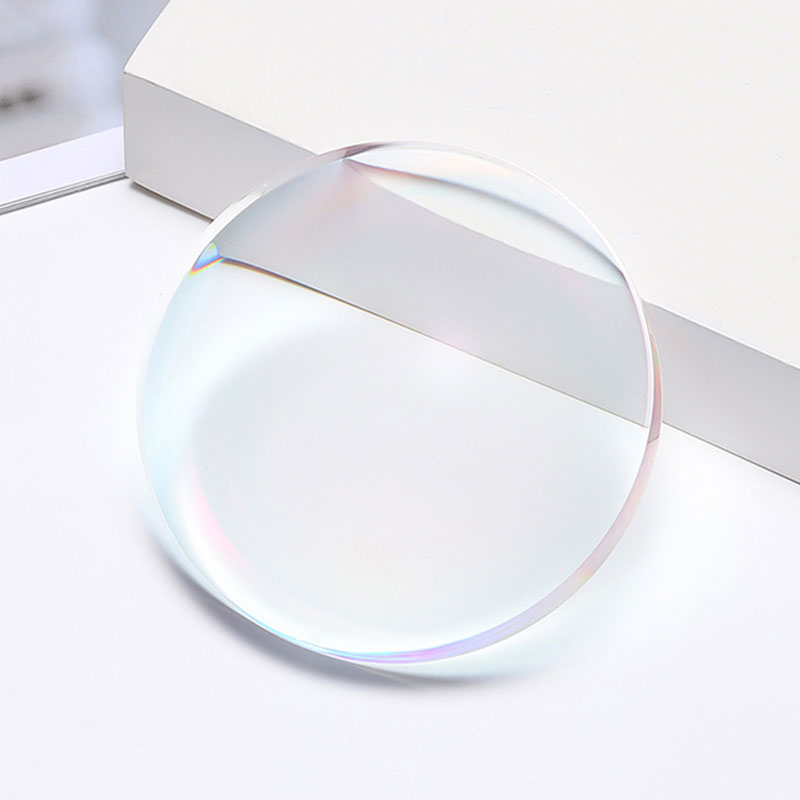
 All-Purpose Progressive Lens for Balanced Vision and Consistent WearThis progressive design supports distance, intermediate, and near vision with features like SoftTransition and Variable Inset, promoting smooth adaptation and natural head posture for everyday full-time use.View Product →
Modern progressive lens designs also take daily behavior into account. Corridor length, intermediate width, and near zone placement are not arbitrary numbers. They are chosen based on how people actually position their heads when walking, working, and reading. A well-fitted progressive lens supports your natural head posture rather than forcing you into awkward angles. For a first-time wearer, that means you should not have to tilt your chin down artificially or strain your neck to find a clear zone in the lens.
What the Adaptation Period Really Feels Like
Most new progressive lens wearers notice mild spatial distortion during the first few days. Peripheral zones near the edges of the lens carry unavoidable optical blur, and your brain needs time to learn how to ignore that blur while your central vision moves across the power gradient. This is a physical property of the lens design, not a sign that the lenses are wrong.
Common symptoms during early adaptation include the sensation that the floor seems to ripple when you walk downstairs, slight dizziness when turning your head quickly, and a brief “swim” feeling when you first put the glasses on in the morning. These symptoms usually peak within the first 48 hours and fade substantially within a week. By the end of the second week, most people report that their eyes and feet feel coordinated again.
| Day Range | What You May Experience | What Helps During This Stage |
|---|---|---|
| Day 1–2 | Mild dizziness, spatial distortion, difficulty with stairs | Wear glasses all day, keep head movements deliberate, avoid task-switching too quickly |
| Day 3–7 | Improved stability, clearer intermediate vision, occasional blur when glancing sideways | Practice eye-and-head coordination by looking at objects at different distances |
| Day 8–14 | Most daily activities feel natural, brief discomfort in unfamiliar environments | Use them while driving, shopping, and cooking to build real-world confidence |
| Week 3–4 | Automated visual scanning, minimal conscious thought about lens zones | You can begin to move your eyes alone without turning your head for smaller shifts |
If symptoms do not improve after two weeks of consistent wear — or if you feel nauseous every evening — that is not a reason to give up on progressive lenses. It is a reason to revisit the fitting. Incorrect pupillary distance measurement, too-short fitting height, excessive pantoscopic tilt, or inappropriate corridor length for your lifestyle can all produce persistent discomfort that has nothing to do with whether progressives suit your eyes.
Practical Techniques That Speed Up Full-Time Adaptation
Full-time wear is the goal, but how you wear them in those first weeks makes a big difference. These techniques are used by opticians and dispensing professionals to accelerate the adjustment period.
- Point your nose toward the target. When you want to see something clearly, aim your nose at it so your eyes look through the correct optical zone. Later, as your brain builds a mental map of the lens, smaller eye movements will replace this deliberate head movement.
- Move your chin toward the object for near tasks. When reading a menu or checking your phone, gently lower your head rather than rolling your eyes downward. This brings the near zone into alignment naturally.
- Do not keep switching to your old single-vision glasses. Going back and forth resets the adaptation clock. Unless you need to drive immediately and feel unsafe, stick with the progressive pair.
- When walking down stairs, keep your gaze slightly lower and let your head, not just your eyes, follow the steps. This shortens the visual field and reduces the wavy sensation that occurs in the lower peripheral zone.
- If you feel tired in the late afternoon, take a short break by closing your eyes for a minute. Fatigue amplifies lens discomfort, so regular rest supports smoother adaptation.
One useful mental strategy is to remember that you are not learning to see — you are learning to point your eyes through a lens. That distinction simplifies the process. The lens is not supposed to be perfectly clear across the entire surface. It is only supposed to be clear where your visual axis passes, and you are the one who controls where that axis goes.
Are There Situations When You Should Remove Them?
Although progressive glasses are designed for all-day wear, there are a few situations where you may need extra caution early on, and one or two cases where temporary removal is genuinely sensible.
Driving in the first few days
You can drive with progressive lenses, but avoid doing so for the first day or two, especially in unfamiliar areas or at night. The visual side-shift that occurs when you check side mirrors can feel misleading until your brain recalibrates. After a simple driveway test — looking back and forth from the left mirror to the right mirror without moving your head — you will quickly notice how the lens behaves, and most drivers adapt within a few short trips.
Up and down stairs
Take stairs slowly during the first week. Position your foot on each step deliberately and let your head follow your feet. The lower near zone of a progressive lens sits where you normally view the next step, which temporarily causes an apparent shift in step height. This resolves as your brain integrates the new depth cues.
Activities requiring a wide horizontal field
Some sports, such as basketball or downhill skiing, need wide, undistorted peripheral vision. In these cases, many wearers keep their progressives for general wear but switch to sports-specific single-vision glasses during intense play. This is not an argument against full-time wear; it is simply good sense for specific safety-critical activities. However, everyday cycling and gym workouts are usually perfectly fine once adaptation is complete.
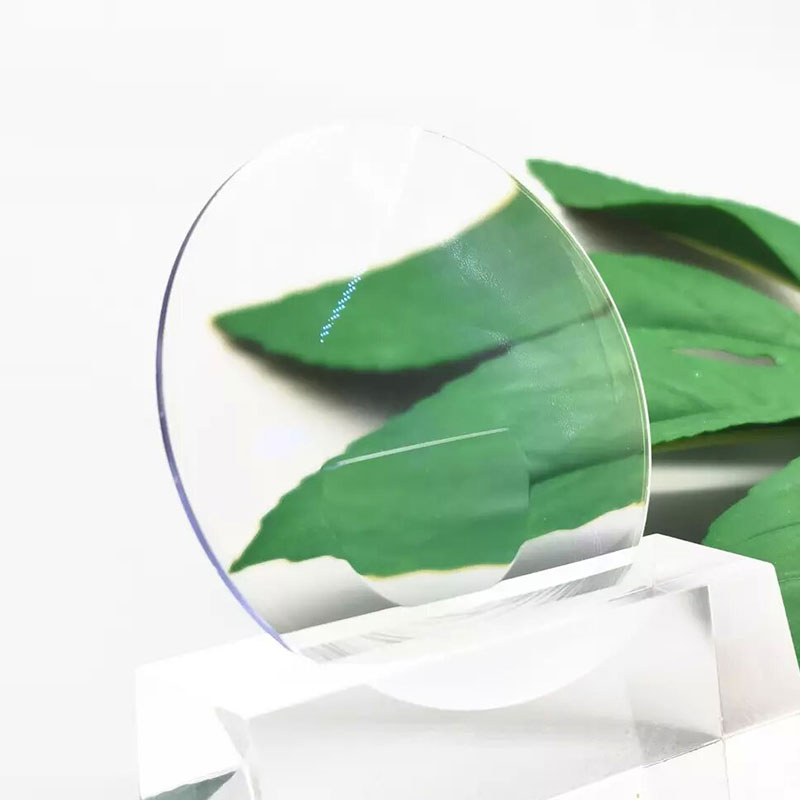
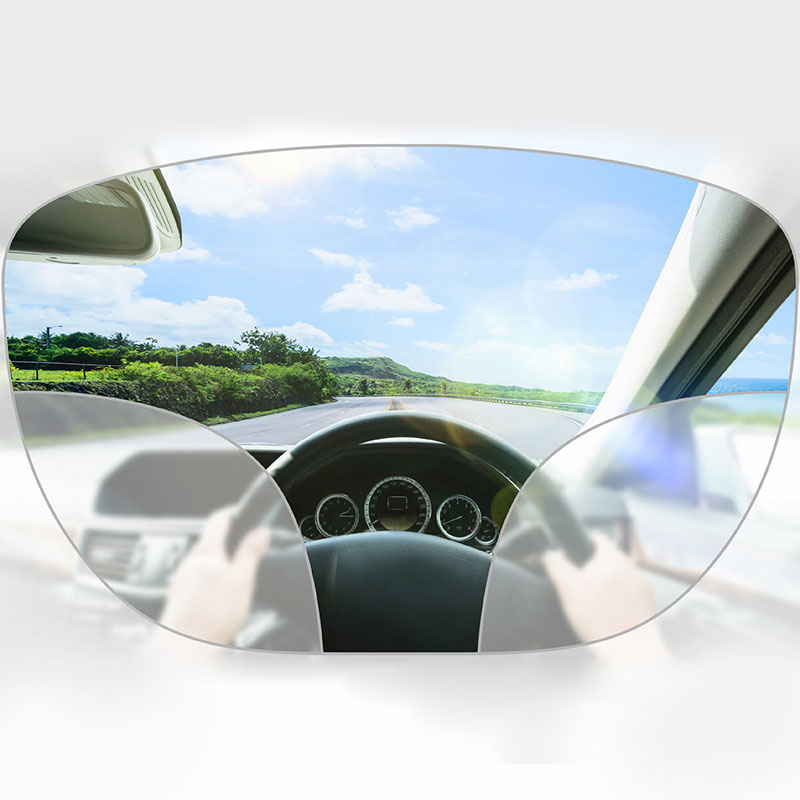 Driver Progressive Lens with Wide Distance Zone for Road UseThis driving-focused progressive lens offers a wide distance area for clear windscreen viewing and an intermediate zone for dashboard gauges, making it suitable for commuters and professional drivers.View Product →
There is also a common misconception that you should remove progressive glasses while using a desktop computer because the intermediate zone is narrow. Modern occupational and office progressive designs specifically widen the intermediate band, making desk work comfortable. If your job involves many hours of screen work, you benefit more from an office-oriented design than from taking your glasses off.
Why the Design and Fitting Determine Your Full-Time Comfort
“Can I wear progressive glasses all the time?” depends less on your eyes and more on whether the lens design actually matches your daily visual demands. A generic progressive lens with an aggressive corridor and compressed zones can make full-time wear feel exhausting. A well-designed lens that corresponds to your lifestyle feels natural by the second week.
Consider how you distribute your visual attention. If you spend your day moving between a team meeting across the table and notes on your desk, you need a design with a comfortable intermediate corridor. If you work in a workshop where you frequently look between a tool at arm’s length and a blueprint on the wall, you need a design with smooth lateral blending. This is why lens design families exist — not as marketing labels, but as functional optimizations for different use patterns.
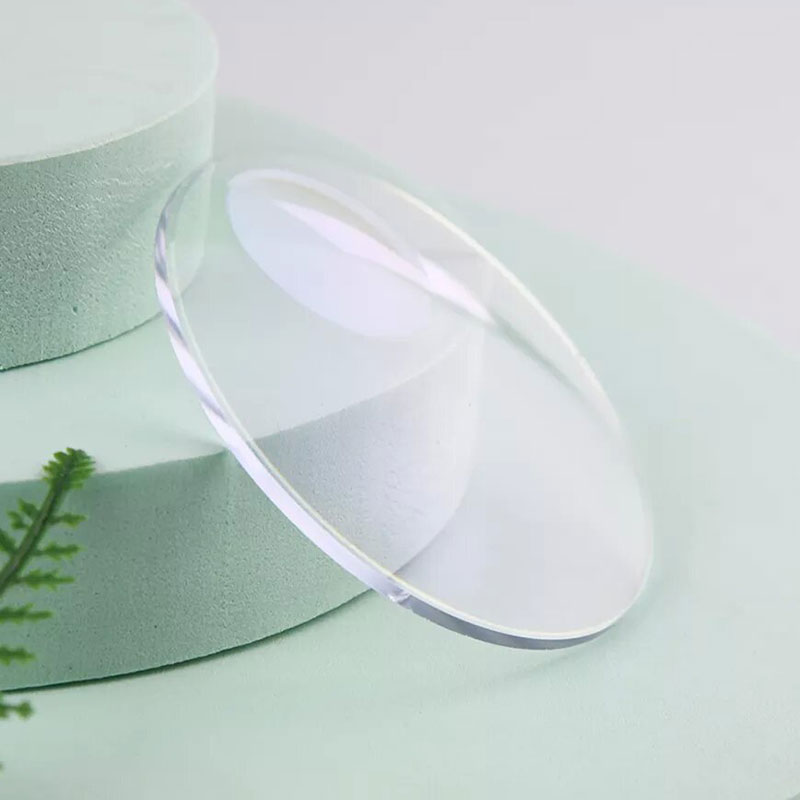
 Office Occupational Progressive Lens for Desk and Near TasksThis occupational lens widens the intermediate field and provides an accessible reading area for office work, laptops, and tasks requiring frequent near-to-intermediate focus within a two-meter range.View Product →
Fitting parameters matter equally. Three measurements determine your daily experience: pupillary distance, monocular pupillary distance, and fitting height. If the optical center is even one millimeter off, the distance and near zones shift relative to your pupil, causing blur where you expect to see clearly. A reputable dispenser will also measure vertex distance, pantoscopic tilt, and face wrap angle. These seemingly small details are the difference between a progressive lens that feels effortless all day and one that leaves you with a headache by 4 p.m.
If your first progressive pair still feels difficult after two weeks, ask your optician to verify the fitting rather than immediately ordering a new lens. Often the problem is a measurable parameter that can be corrected. If the issue is the corridor length — for example, you have a short fitting height and the lens design has a long corridor — then changing the specific progression design while keeping the same prescription can resolve the problem.
Progressive vs. Single-Vision: What You Trade Off
To wear progressives all day, it helps to understand what they cost you in optical terms compared with single-vision lenses. Every progressive lens is a compromise. In exchange for continuous vision at all distances, you give up some peripheral clarity and experience minor spatial distortion at the lens edges. How much clarity you lose depends on the sophistication of the lens design.
| Factor | Single-Vision Lenses | Progressive Lenses |
|---|---|---|
| Focus range | One fixed distance selected by prescription | Continuous focus from distance to intermediate to near |
| Peripheral vision | Clear across nearly the entire lens surface | Some peripheral blur outside the optical corridor |
| Adaptation period | Usually no adaptation needed | Typically 1–2 weeks, varies by individual |
| Visual “swim” when moving | Absent | Present during early adaptation, fades over time |
| Suitability for presbyopia | Only corrects one distance; other distances blurry | All distances covered in one pair |
| Multiple pair requirement | Often needed for near, intermediate, and distance | One pair handles most daily situations |
For someone who is 45 or older and noticing that reading glasses no longer work for computer screens, the choice is rarely about whether progressives are better in an absolute sense. It is about whether you want to carry two or three pairs of glasses around all day. Full-time progressive wear eliminates that friction. You keep glasses on your face from morning to night and never think about which pair you left in the car.
Frequently Asked Questions
Will wearing progressives all the time weaken my eyes?
No. Wearing progressive lenses does not change your underlying prescription or accelerate presbyopia. They simply provide the correct optical power at the appropriate distance. Your eyes are not “working harder” because of the lens design. In fact, having the correct correction at every distance reduces eye strain.
Can I wear progressives for the entire day from day one?
Yes, and that is recommended. Putting them on early and keeping them on consistently gives your brain uninterrupted visual information, which shortens the adaptation period. The more you pause and switch back to old glasses, the longer adaptation takes.
Why does the floor look curved when I walk?
This is caused by the progressive power gradient in the lower peripheral zone. As you look down toward your feet, your eyes pass through the increasing reading power, which temporarily shifts the apparent position of the floor. Your brain compensates for this within days as it learns to trust your central vision.
Should I take them off for computer work?
No, if your progressive lens has a suitable intermediate corridor. Standard progressives work for general computer use, while occupational designs like office lenses widen the intermediate zone. If you spend hours in front of a screen, consider a professional or office progressive design for daily wear.
Is it normal to feel tired at the end of the day?
For the first week, yes. Your brain is processing additional spatial information it previously ignored. This subtle cognitive load can contribute to eye fatigue, especially in the late afternoon. It usually disappears by the second week as the processing becomes automatic.
What if two weeks pass and my progressives still feel wrong?
Ask your optician to recheck fitting measurements, especially fitting height and pupillary distance. Persistent blur, headache, or nausea is not something you should “push through.” Sometimes changing to a wider-corridor design or a complete freeform design resolves the sensitivity.
How Long Until Full-Time Wear Feels Completely Natural?
Most wearers reach a point around week three where they stop thinking about the lens entirely. You will notice this in small moments: you catch something across the room, glance down at your phone, then look back up, and at no point did you consciously choose a lens zone. That is the mark of successful adaptation.
If you continue to notice instability after a month, do not assume you are an unsuitable candidate for progressives. Unresolved discomfort almost always points to a specific technical factor. Check whether your frames sit at the correct distance from your eyes, whether the frame wraps around your face, and whether the lens design was selected based on your visual profile rather than a generic default.
Also remember that your first progressive prescription is not necessarily your last. As your prescription changes over the years, so will the lens design that suits you. The confidence you build during your first full-time adaptation will make future transitions easier, because your brain already knows how to use a progressive lens.
What to Ask Your Optician Before You Leave the Dispensing Table
Because full-time wear depends so much on fitting quality, ask these questions before finalizing your order:
- What is my fitting height, and does the frame provide enough vertical space for my chosen corridor length?
- What is my monocular pupillary distance, and has it been measured separately for each eye?
- Which progressive design family was selected for me, and why is it a match for my daily activities?
- Will the freeform or digitally surfaced version make a noticeable difference for my particular prescription?
- What should I feel in the first week, and when should I return for a follow-up fitting?
Good dispensers treat adaptation as a two-week collaboration, not a one-time sale. If you leave without knowing what to expect and when to come back, you are missing half of the service.
So, can you wear progressive glasses all the time? Yes — and the evidence from daily practice is that full-time wear is actually the most effective route to a smooth adaptation period. Put them on in the morning, keep them on throughout the day, and allow your brain a full two weeks to map the lens. If discomfort persists beyond that, treat it as a technical fitting issue rather than a personal failure. A properly selected and precisely fitted progressive lens is designed to stay on your face from sunrise to sunset, and once you stop noticing it, that is exactly when you know it is working.