

 Español


What Is Presbyopia and Why Do You Need Multifocal Lenses?
Picture this: you are holding a restaurant menu at arm's length, squinting at the print, or you just bumped your phone's font size up another notch. These small frustrations are the early signature of presbyopia, the age-related loss of near vision that catches up with nearly everyone after 40.
Presbyopia is not a disease. It is a natural physiological process in which the crystalline lens inside the eye loses elasticity and can no longer shift focus easily from distant objects to nearby text. Estimates from 2025 put the number of people affected worldwide at roughly 1.8 billion, and close to 90% of adults over 45 report some difficulty reading at close range.
Once presbyopia sets in, a single-vision lens is no longer enough: it corrects one distance, not two. That puts you in front of two mainstream multifocal options, bifocal and progressive lenses. So which is better? The honest answer is that neither is universally superior. The right choice depends on your prescription, your daily visual habits, your budget, and how much adaptation you can tolerate. This guide lays out the trade-offs from a lens manufacturer's perspective, so you can make an informed choice before your next eye exam.
Bifocal Lenses: The Traditional Two-Zone Solution
How Bifocal Lenses Work
A bifocal lens contains two distinct optical zones. The large upper section carries the distance prescription, while the smaller lower segment is ground for near vision. A visible dividing line separates them.
Segment shape influences how the lens behaves. A flat-top, or D-shaped, segment is the most common design: its straight upper edge creates a wide reading area whose optical center aligns well with your natural reading gaze. The visible line is not merely a cosmetic drawback; it gives your eye a clear landmark, which is why first-time multifocal wearers often find bifocals easy to use. You can see how a flat-top bifocal lens is constructed to understand the segment geometry in detail.
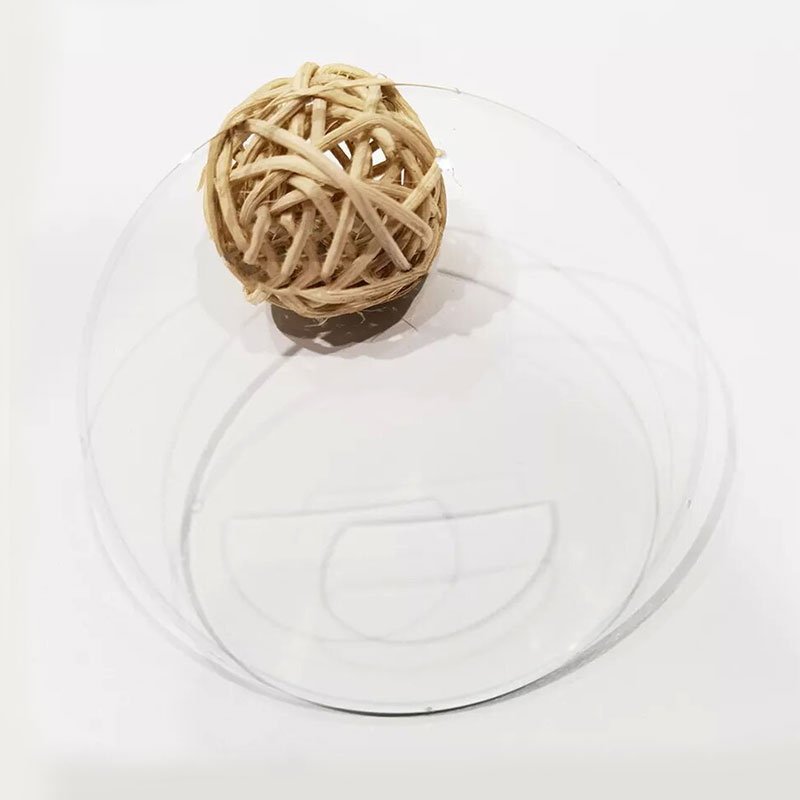 Custom 1.499 Bifocal Flat Top Lens Suppliers, OEM/ODM Factory - Jiangsu Green StJiangsu Green Stone Optical Co., Ltd is China 1.499 Bifocal Flat Top Lens Suppliers and OEM Factory, details:the flat top bifocal is one ...View Product →
Pros and Cons of Bifocal Lenses
The merits of bifocals are practical:
- Lower cost than most progressive designs.
- Wide, stable near zone with no peripheral distortion.
- Essentially no adaptation period for most wearers.
- Simple fitting; standard frame measurements usually suffice.
The limitations are just as clear:
- The visible segment line makes the lens look dated to some wearers.
- There is no intermediate zone, so computer screens, dashboards, and countertops stay blurred.
- Image jump can occur: objects appear to shift position as your gaze crosses the segment boundary.
Bifocals are often dismissed as an outdated solution, yet they remain genuinely valuable in specific situations. Pilots favor them because cockpit instruments sit at a stable near distance. Teachers, nurses, and assembly workers who read documents at a fixed close distance benefit from the generous reading area. And for a budget-conscious first-time wearer, bifocals offer a low-risk introduction to multifocal vision without any learning curve.
Progressive Lenses: The Seamless Multifocal Alternative
How Progressive Lenses Work
A progressive lens solves the same problem without any visible line. Power changes continuously from the top of the lens to the bottom, creating three functional zones: a distance zone at the top, an intermediate zone through the middle for screen and dashboard distances, and a near zone at the bottom for reading.
The continuous region between distance and near is called the progressive corridor. A shorter corridor gets you into reading power faster, which helps in smaller frames, but it concentrates more optical distortion at the lens edges. A longer corridor feels smoother and more forgiving, although it requires a frame with sufficient vertical height. For most everyday wearers, a standard stock progressive — such as our 1.56 progressive lens options — strikes a comfortable balance between corridor performance, lens thickness, and value.
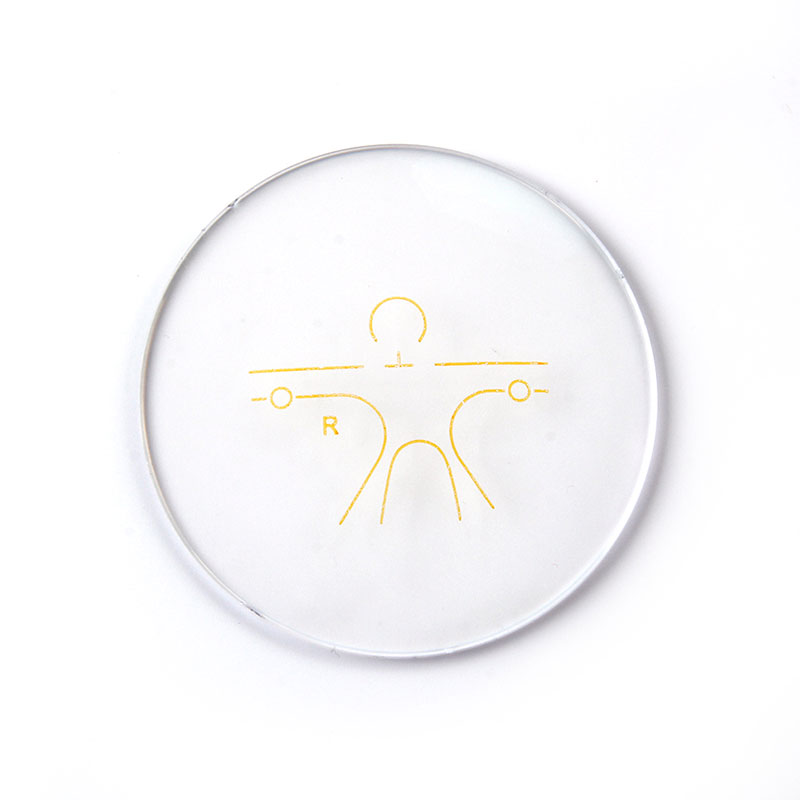 Custom 1.56 Progressive Lens HMC Suppliers, OEM/ODM Factory - Jiangsu Green StonJiangsu Green Stone Optical Co., Ltd is China 1.56 Progressive Lens HMC Suppliers and OEM Factory, details:Progressive lens is a multi-fo...View Product →
The Technology Behind Modern Progressives
This is where progressive lenses pull ahead of traditional multifocal designs. Standard progressives are molded from semi-finished blanks and deliver a generic progression intended for an average face and fitting position. Freeform progressives, by contrast, are digitally calculated and CNC-polished for your individual prescription, pupillary distance, frame tilt, and vertex distance.
The payoff is better control of peripheral aberrations, a wider intermediate zone, and a corridor position tuned to your habitual head posture. From a manufacturing standpoint, freeform allows variables such as corridor length, add power, and aberration profiles to be balanced at the point of production rather than fixed at the blank stage. You can learn about freeform progressive lens technology directly from the engineering side to see how these choices affect what you see through the periphery of the lens.
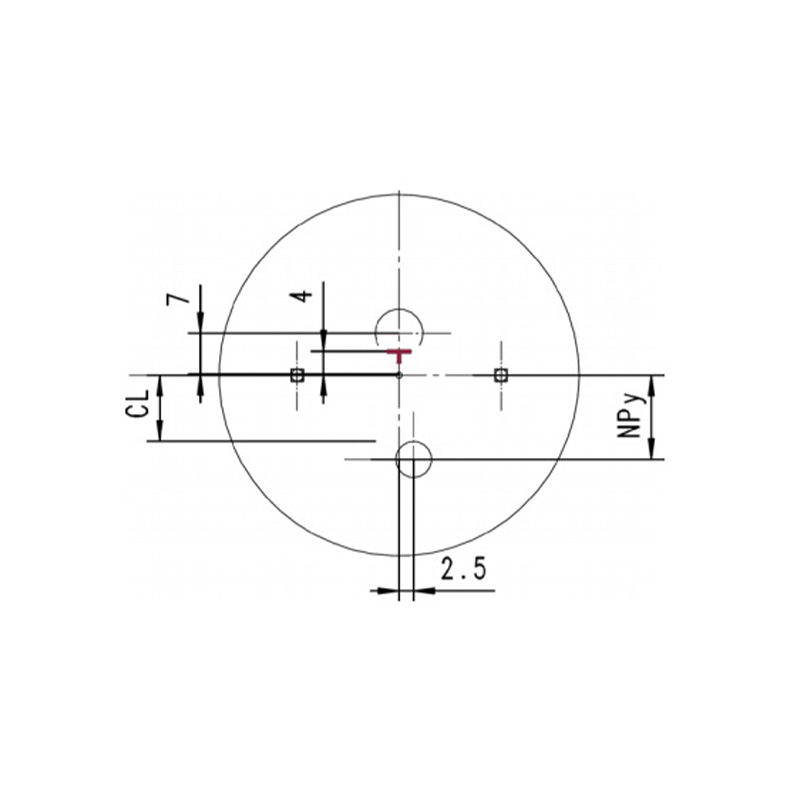 Custom OptoTech SD Freeform Progressive Lenses Suppliers, OEM/ODM Factory - JianJiangsu Green Stone Optical Co., Ltd is China OptoTech SD Freeform Progressive Lenses Suppliers and OEM Factory, details:The OptoTech SD ...View Product →
Pros and Cons of Progressive Lenses
The strengths of progressives explain their popularity:
- Seamless visual transition across far, intermediate, and near distances.
- No visible line; the lens looks identical to a standard single-vision pair.
- The intermediate zone covers computer, dashboard, and countertop distances that bifocals miss.
- After adaptation, vision feels more natural than with any two-zone design.
The trade-offs matter too:
- Higher cost, especially for freeform customized designs.
- An adaptation period of one to two weeks, with possible peripheral "swimming" in the first days.
- Precise fitting measurements are mandatory; small errors in pupil height or frame tilt degrade performance.
- A small percentage of wearers never fully adjust to the peripheral distortion.
The adaptation period is the most common reason people abandon progressives. In the first few days, quick head movements can make the world seem to sway slightly. That sensation usually fades within two weeks as your brain learns to use the corridor and distance zones intentionally. A properly measured and well-fitted progressive reduces this effect dramatically.
Bifocal vs Progressive: Key Differences at a Glance
When you compare the two designs directly, the practical differences fall into a few clear categories.
| Comparison Point | Bifocal Lenses | Progressive Lenses |
|---|---|---|
| Optical zones | Two: distance and near | Three: distance, intermediate, near |
| Visible dividing line | Yes | No, continuous gradient |
| Intermediate vision | Not covered | Covered by the central corridor |
| Adaptation period | Minimal or none | Usually one to two weeks |
| Peripheral distortion | None | Mild "swim" possible, design dependent |
| Price range | Lower | Higher, especially freeform |
| Best suited for | Budget buyers, fixed-distance work, first-time multifocal wearers | Frequent screen users, drivers, anyone wanting a natural look |
Design and Vision Zones
The most fundamental difference is the number of optical zones. Bifocals offer two discrete prescriptions with an abrupt boundary; progressives offer a continuous gradient across three zones. If your day includes a computer screen at arm's length, the progressive has a clear structural advantage. If your reading is mostly paper-based at a fixed close distance, the bifocal's wide near segment is hard to match.
Visual Comfort and Adaptation
Bifocals require almost no adaptation, but the segment line can cause image jump when the gaze crosses it. Progressives demand a short learning curve, yet once adapted, they deliver smooth, continuous focus that feels close to natural vision. For first-time multifocal wearers, the ease of bifocals is appealing. For people who switch distances constantly, most report better long-term comfort with progressives.
Cost Comparison
Price logic is straightforward. Bifocals sit at the low end because their two-zone construction is simpler to produce. Progressives span a wider range: stock designs made from semi-finished blanks are the entry point, while freeform customized progressives cost more because the surface is digitally calculated and individually polished. In many cases, the gap between a stock progressive and a freeform design is larger than the gap between a bifocal and a stock progressive.
Suitable Scenarios
Think about your day in blocks. For driving and outdoor activity, progressives have a clear advantage because the dashboard, mirrors, and road signs sit at different distances. For office and computer work, progressives cover the screen zone while bifocals force you to tilt or lean forward. For reading and close craftwork, bifocals deliver a wider, distortion-free near zone. Fixed-work-distance occupations such as teaching, nursing, and assembly work can do well with bifocals. Anyone who mixes distances throughout the day is usually better served by progressives.
Which One Should You Choose? A Scenario-Based Guide
Choose Bifocal Lenses If...
Choose bifocals when simplicity is your priority: a tight budget, your first multifocal prescription, or a job built around a single reading distance. Bifocals also suit wearers who tried progressives and could not tolerate the peripheral swimming sensation, as well as those whose prescription includes unusual prismatic requirements that are easier to handle in a two-zone design.
Choose Progressive Lenses If...
Choose progressives when your life involves constant shifts of focus, moving from a screen to a conversation to a notepad, or when appearance matters to you. Progressives are also the stronger option for driving, since the intermediate zone keeps the dashboard and mirrors in focus. If you are willing to invest one or two weeks in adaptation, progressives provide the most complete visual solution available in a single pair of glasses.
What About Materials and Coatings?
Lens material affects thickness and weight. Lower-index materials such as 1.499 are economical but bulkier, while higher-index options like 1.56, 1.60, and 1.67 keep stronger prescriptions thin and light. Coatings add practical value to any multifocal design: blue-light-blocking layers reduce eye strain during screen-heavy days, photochromic treatments darken outdoors and return to clear indoors for people who alternate between sunlight and office lighting, and hard multi-coated surfaces improve scratch resistance while cutting the reflections that can interfere with adaptation.
Key Takeaways and Next Steps
There is no single "better" lens, only a better fit for your eyes and your routines. Bifocals remain a competent, affordable, zero-adaptation solution for people with predictable visual demands. Progressives deliver a more complete and natural visual experience at a higher price and with a short learning curve.
Before your next eye exam, prepare a few specifics: how many hours you spend on screens, how often you drive and under what conditions, whether you read more on paper or devices, and any past difficulty with dizziness or balance. Ask your optometrist to measure your pupillary distance, pupil height, and frame fitting height — accurate numbers are decisive for progressive performance.
Use this comparison as a checklist during your fitting conversation. When you understand the trade-offs between visible lines, intermediate vision, adaptation, and cost, the decision stops being about which lens is abstractly "better" and becomes an informed choice about which lens fits your life.