

 Español



You are past 40, and something has changed. The menu at your favorite restaurant suddenly seems dimmer. The phone you once read easily now has to be held at arm's length. After a full day of switching between a computer monitor, printed documents, and a phone, your eyes feel tired. This is not a fluke—it is the natural slowing of your eye's focusing system, and for millions of adults it is exactly the moment they start wondering whether progressive lenses are right for them.
Progressive lenses are the most common solution for people who need clear vision at more than one distance but do not want to juggle several pairs of glasses. This guide explains who should wear them, who should be cautious, and how to match a progressive design to your daily life. If you are completely new to the idea, read our explanation of why people need progressive lenses first.
What Are Progressive Lenses and How Do They Work?
Progressive lenses are multifocal lenses that combine three optical zones into one lens:
- Upper zone for distance vision, such as driving or watching television.
- Middle zone for intermediate distances—roughly 60 to 70 cm, the typical space between your eyes and a computer screen.
- Lower zone for near vision, such as reading a book or checking your phone.
The lens power changes progressively from top to bottom, which is where the name comes from. Unlike bifocals or trifocals, there is no visible segment line, so the lens looks like a normal single-vision lens from the outside.
The trade-off is that a smooth transition creates mild peripheral distortion on the sides of the lens. Your brain needs a short adjustment period to learn how to use the three zones efficiently. In everyday terms: look slightly up for distance, straight ahead for the computer, and slightly down for reading.
The #1 Candidate: Adults Over 40 with Presbyopia
The most common candidate for progressive lenses is an adult over 40 who is beginning to experience presbyopia.
Presbyopia is the natural age-related hardening of the eye's crystalline lens. As the lens loses flexibility, your eye finds it harder to switch focus between objects far away and objects close up. It is not a disease—it is a normal part of aging that affects virtually everyone eventually.
Typical warning signs include:
- Holding books, menus, or your phone farther away to read them.
- Increasing the font size on your phone or tablet.
- Needing brighter light for reading.
- Feeling eyestrain or headaches after close-up tasks.
Presbyopia usually appears around age 40 and becomes more noticeable through the 50s. A single-vision reading pair solves the near problem but leaves distance vision unchanged. Progressive lenses cover the entire range, which is why they are a standard recommendation for people who need clear sight at every distance throughout the day.
6 Signs You Might Be a Progressive Lens Candidate
Age matters, but daily experience matters more. These six self-check signals will help you decide.
1. You are over 40 and near vision is clearly declining
If reading a label, replying to a message, or inspecting a receipt requires the item to be pushed further away, your focusing range is shrinking. Progressives restore close-up clarity without abandoning distance vision.
2. You already own two pairs of glasses
If you swap between distance glasses and reading glasses several times a day, you know how annoying it is to have the wrong pair at the wrong moment. One progressive pair replaces both.
3. Your eyes feel tired after long computer sessions
Many office workers feel fatigued because their single-vision lenses are not optimized for the intermediate distance of a monitor. The middle zone of a progressive lens is built specifically for that 60–70 cm range.
4. You pause when refocusing from near to far
When you look up from your phone to the road, does the world take a second to sharpen? That hesitation signals that your eye's focusing mechanism is working harder than it used to. Progressives reduce the strain by putting the right power at each viewing distance.
5. You dislike the look of bifocal segment lines
If the visible line on bifocals bothers you for cosmetic or practical reasons, progressives offer the same multi-distance function in a seamless lens.
6. Your prescription has been stable for a while
Progressive lenses are precision products built around accurate measurements. If your prescription is still changing rapidly, it may be wiser to wait until it stabilizes.
If three or more of these signs sound familiar, you are a strong candidate.
Who Should NOT Wear Progressive Lenses?
Honest candidacy includes talking about exceptions. Progressives are not right for everyone, and your optometrist should be part of that decision.
People who cannot accept an adaptation period
Most first-time wearers adapt within a few days to two weeks. During that window, you may notice mild swaying in your peripheral vision on stairs and the need to turn your head instead of just moving your eyes. If you know you will not tolerate that, discuss the trade-offs before you buy.
Certain professions with extreme visual demands
Pilots, surgeons, and similar roles depend on rapid far-to-near switching. A general-purpose progressive may not be the best starting point. That does not mean progressives are impossible—some occupational or specialized designs work well—but a standard everyday design is not always the answer.
People with certain eye conditions
Severe strabismus, double vision, or recovery after cataract surgery can complicate progressive fitting. In these cases, an ophthalmologist should evaluate your options rather than relying on general guidance.
Anyone who skips precise measurements
Progressives depend heavily on pupillary distance, pupil height, frame tilt, and frame depth. If you cannot get these measured properly—or if your chosen frame is too small to fit the progressive corridor—the lenses will not perform as designed.
The caveat: being in one of these categories does not automatically disqualify you. It means you need a professional assessment and possibly a different type of progressive design.
Not All Progressives Are the Same: Matching Lens Design to Your Life
A common misconception is that there is one progressive lens and every wearer receives the same product. In reality, progressives are designed around different lifestyles, and choosing the right design matters almost as much as choosing progressives at all.
| Design family | Best suited to | Key features |
|---|---|---|
| Everyday Progressives | Adults who need distance, intermediate, and near correction throughout the day | Balanced zones for all-around use, from standard to premium options |
| Lifestyle Designs | Frequent drivers, younger patients, early presbyopes | Expanded distance and intermediate zones for specific activities |
| Occupational Designs | Office workers and people with long computer hours | Wider intermediate and near zones, less head movement |
| Freeform Designs | Wearers who want maximum visual quality and have a higher budget | Individually calculated optics based on precise fitting data |
Everyday progressives for all-around use
If your day mixes driving, conversation, computer work, and reading, an everyday progressive is the natural default. This category comes in standard, deluxe, and dynamic versions, so the optical quality can be matched to your visual demands and budget. A typical all-purpose progressive lens design is a good starting point for most first-time wearers.
 Custom All Purpose Progressive Lens Suppliers, OEM/ODM Factory - Jiangsu Green SJiangsu Green Stone Optical Co., Ltd is China All Purpose Progressive Lens Suppliers and OEM Factory, details:Updated design with additio...View Product →
Lifestyle designs for specific activities
If you spend hours behind the wheel, a driver progressive lens design enlarges the distance and intermediate zones and reduces glare sensitivity for road use. Younger patients with reduced focusing ability may do better with a junior progressive design, while early presbyopes often prefer a Relax-style lens that prioritizes near vision.
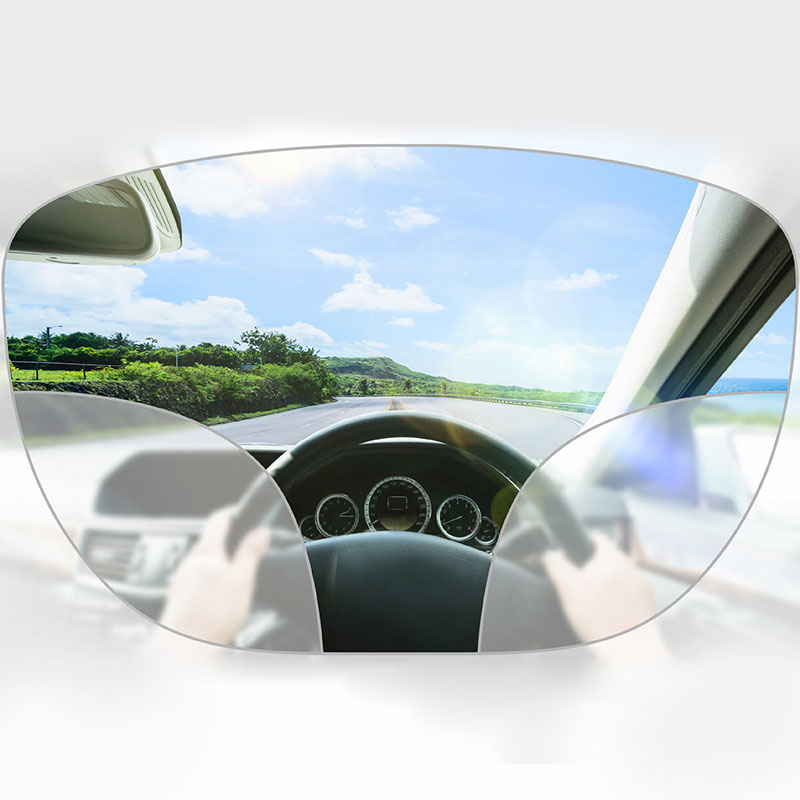 Custom Driver Progressive Lens Suppliers, OEM/ODM Factory - Jiangsu Green Stone Jiangsu Green Stone Optical Co., Ltd is China Driver Progressive Lens Suppliers and OEM Factory, details:The Custom Driver is a progressi...View Product →
Occupational designs for desk-bound days
Office work is mostly middle-and-near, all day long. Occupational progressives expand those zones and reduce the need to tilt your head into the right part of the lens. If you sit at a computer for six or more hours a day, ask your optometrist about an office progressive lens option before committing to a general-purpose design.
 Custom Office Occupational Lens Suppliers, OEM/ODM Factory - Jiangsu Green StoneJiangsu Green Stone Optical Co., Ltd is China Office Occupational Lens Suppliers and OEM Factory, details:An excellent lens to wear while...View Product →
Freeform designs for maximum precision
Freeform digital progressives are calculated individually from your fitting measurements and frame geometry. The result is a wider field of clear vision and less peripheral distortion than conventionally manufactured lenses. Wearers with higher expectations and a comfortable budget often find them worth the premium.
How to Get Started: Questions to Ask Your Optometrist
If you have decided to try progressives, take these questions to your eye exam so you and your optometrist can set the fitting up for success:
- Is my prescription stable enough for progressives? Rapidly changing numbers can make any multifocal lens outdated too quickly.
- Will my pupillary distance and pupil height be measured accurately? These two values decide where the progressive zones sit in front of your eyes.
- Does this frame have enough vertical depth? Small frames squeeze the reading zone and make adaptation harder.
- Which design type suits my daily visual routine? Be honest about your driving hours, computer time, and reading habits.
- What if the adaptation is harder than expected? Ask when you should return for a re-fit or design adjustment.
A successful progressive experience depends on three things: an accurate prescription, the right lens design, and a frame that fits the design. All three deserve equal attention.
Final Verdict: Is a Progressive Lens Right for You?
Here is the short version of everything above. You are a strong candidate if you:
- Are over 40 and notice your near vision fading.
- Switch between distance and near tasks several times a day.
- Spend long hours in front of a computer.
- Want to replace two pairs of glasses with one.
- Can accept a one- to two-week adaptation period.
- Have a stable prescription and access to precise fitting measurements.
If most of these points apply, book an eye exam and have an honest conversation with your optometrist. If you are unsure—or if you fall into the cautious category—ask about occupational designs or start with a single-vision reading pair before making the leap.
Progressive lenses are not the answer to every vision problem. But if you have reached the age where distance is still clear and near vision is becoming an effort, a well-fitted progressive pair is very likely the most practical way to see clearly from sunrise to bedtime.