

 Español



You collect your new progressive lenses, put them on, and notice that the pavement appears to tilt slightly when you turn your head. The next morning, you need to drive to work. The natural question is: is it safe to drive with progressive lenses? It is safe, provided that you give yourself time to adapt, choose a lens design suited to driving, and confirm that the lenses are fitted accurately. Safety is not an automatic feature of the lenses. It comes from the interaction between the progressive design, the frame, and the way you scan the road. This article explains what affects that interaction and how to make your first days behind the wheel predictable and worry-free.
The Short Answer: Yes, but Not on the First Day
The short answer is yes. Most progressive lens wearers can drive safely in modern progressive lenses. Many wearers are able to handle both daytime and light nighttime driving after one to two weeks of use, with the first few days acting as a learning phase. However, the answer comes with a condition: you should not plan a long, stressful trip on the first day.
During the first 24 to 72 hours, your visual system is learning to combine clear distance vision with clear near vision. Unlike bifocal lenses, progressives do not have a visible jump line. The eyes move along a corridor of gradually changing power, so looking from the road to the dashboard to the side mirror takes practice. The lens itself is not dangerous. What is risky is trying to drive before your brain has updated every eye movement. Starting with short, familiar routes and gradually expanding into busier traffic is the safer path.
Why Progressive Lenses Feel Different When You Drive
When you first sit in the car, progressive lenses introduce three visual zones. Each zone is not just a viewing area; it also has a specific optical geometry. The top of the lens is for distance and gives you the road, traffic lights, and side mirrors. The middle helps you read the speedometer and the navigation screen. The lower inset area supports the steering wheel area and any reading material you keep in the car.
Everything between these zones contains lens power that changes gradually. That changing power creates subtle prismatic distortion, most noticeable when you turn your head. This is why the curb looks curved at first and why parked cars may seem to shift as you pass them. These effects are temporary in a properly made lens, but their intensity depends on the design and on how well the frame sits on your face.
Distance Zone
The upper part of the lens gives a clear view of the road, traffic signs, and oncoming vehicles. It works best when you keep your head level and allow your eyes to move naturally.
Intermediate Zone
The middle part covers the dashboard, center console, and side mirrors. When you first wear progressives, objects in this zone may appear slightly wider before your brain adjusts.
Near Zone
The lower part handles maps, navigation screens, and toll tickets. It is smaller than a single vision reading zone, so you may need to turn your head slightly when reaching for the radio.
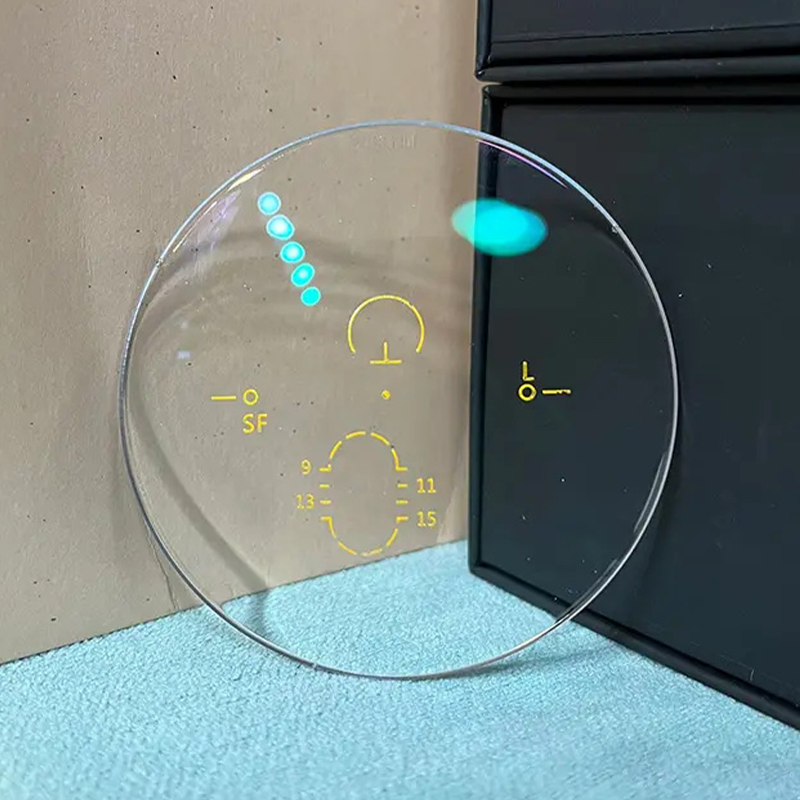 Opto Tech HD Progressive Lenses for Precision VisionThis advanced progressive lens uses point-by-point digital calculation to reduce peripheral distortion, making it ideal for free-form designs where clear distance and near zones matter most.View Product →
This is where free-form or high-definition designs matter. Instead of applying a fixed progressive corridor, a free-form design is calculated point by point for each prescription, often with narrower peripheral distortion. As a lens manufacturer, we use digital surface calculation to keep the “swim effect” low. On the road, this means you can move your eyes across the mirror without feeling as though the side of the car is shifting.
A Step-by-Step Plan for Safe Adaptation
Most adaptation problems come from rushing into heavy traffic before the eyes and brain have created new habits. A simple schedule can help. The goal is not to avoid driving, but to make driving sessions short enough that your brain stays relaxed while it learns.
| Time Period | Suggested Driving Activity | Key Habit to Practice |
|---|---|---|
| Day 1 to 2 | No driving. Walk indoors, climb stairs, and look at distant objects from a window. | Switch your gaze from far to near and back again without moving your whole body. |
| Day 3 to 4 | Short daytime drives on quiet residential streets. | Move your head when checking sidewalks, crosswalks, and driveways. |
| Day 5 to 7 | Main roads and highway driving in daylight. | Check side mirrors by moving your eyes first, then your head slightly. |
| Day 8 to 10 | Dusk or night driving, if daytime feels stable. | Avoid complex intersections at first. Keep your eyes relaxed and keep the windscreen clean. |
Keep your old single vision distance glasses in the glove compartment for emergency use, but avoid switching back and forth during daily adaptation. Continuous wear helps your brain learn faster.
Which Progressive Lens Design Is Safer for Driving?
The design of the progressive lens often matters more than the lens material. Standard stock progressives work well for occasional drivers, but driving-specific and free-form designs can make a visible difference in how stable the road looks while you scan traffic.
| Design Type | Corridor and Viewing Area | Peripheral Distortion | Best Suited To |
|---|---|---|---|
| Standard stock progressive | Balanced corridor, normal distance area | Moderate | Occasional drivers, short commutes, indoor office work |
| Driving-oriented wider corridor | Larger distance area, smoother transition | Low | Daily commuters, highway driving, older drivers |
| Digital free-form HD progressive | Custom-optimized for each prescription | Minimal | Long trips, night driving, sensitive vision, large frames |
If driving is your main activity, a driver-oriented progressive design is a strong choice. The larger distance area makes it easier to look from the road to the side mirror without feeling the corridor close in. Many drivers worry that they will lose the near zone completely. This is not entirely true. A driver progressive design does reduce some near width in order to make the road area larger, so you may prefer a separate pair for tasks like heavy reading or paperwork.
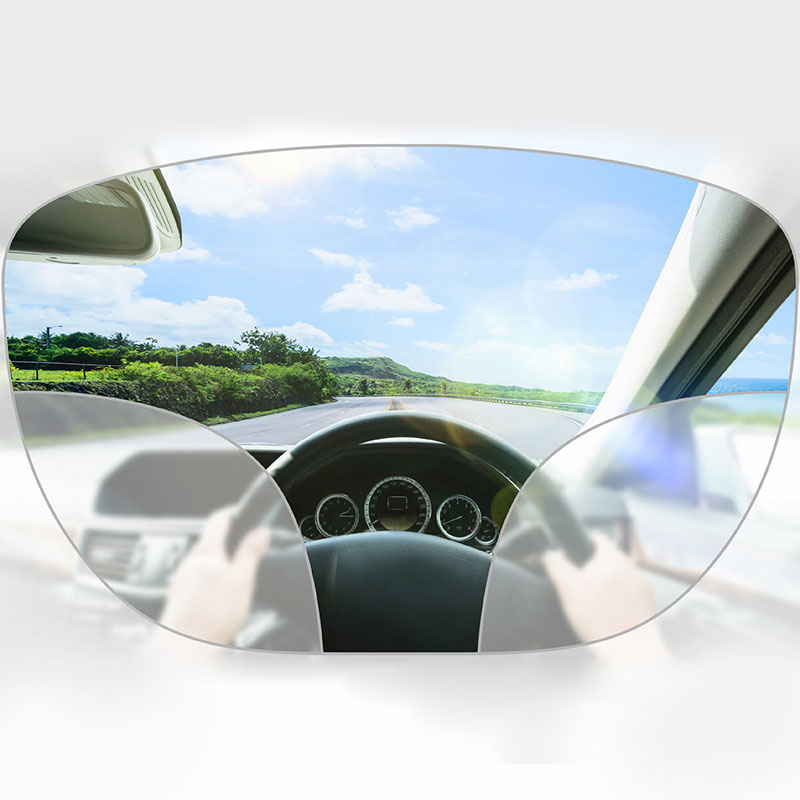 Driver Progressive Lens for Wide Windshield VisionDesigned for drivers and long commuters, this lens enlarges the distance zone for comfortable road and mirror viewing while keeping dashboard gauges readable in the intermediate area.View Product →
If you prefer one pair for most activities, an all-purpose progressive lens remains a balanced option. It gives a reasonable amount of near, intermediate, and distance vision without pushing the design too far in any one direction.
Coatings and Tints That Make Driving Safer
The coating on a progressive lens has more impact on driving safety than many wearers expect. An anti-reflective coating is the most important option for night driving because it reduces glare from oncoming headlights and reflections from the dashboard. Without it, dirty or scratched lenses create halos around bright lights, which can be distracting when you are concentrating on the road.
- Anti-reflective coating: reduces glare from streetlights, headlights, and wet roads at night.
- Hard coating: makes the lens more resistant to scratches, which is especially useful for frequent lens cleaning.
- Hydrophobic and oleophobic coating: helps water and fingerprints roll off the lens, keeping your view clearer in light rain.
- UV400 protection: blocks ultraviolet light and supports long-term eye health.
Photochromic lenses need a special mention for drivers. Most photochromic lenses darken mainly when exposed to ultraviolet rays, and most car windscreens already filter out most UV light. As a result, photochromic lenses often stay mostly clear when you drive during the day. If you want automatic darkening for bright sunshine, make sure the optician explains how that specific photochromic product behaves behind a windscreen.
When to Stop Driving and Investigate
Mild adaptation effects usually settle within the first few days. There is a difference between a normal learning curve and a fitting or prescription problem. If you experience any of the following signs, do not assume that you just need more time.
- You constantly tilt your head to see the side mirror clearly.
- The road appears to tilt or bend even after you stop moving your head.
- You feel dizzy, nauseous, or unbalanced after a short drive.
- You cannot read the dashboard without dropping your chin awkwardly.
- Double vision lasts longer than a few seconds after you look up from a near object.
These signs usually point to a fitting measurement that needs to be checked, such as the pupil distance, fitting height, frame tilt, or vertex distance. The lens design may also be too narrow for your frame. The list overlaps with common progressive fitting errors, which we explain in detail in our analysis of why progressive lenses can be blurry.
Frequently Asked Questions About Driving with Progressives
How long does it take to feel comfortable driving with progressive lenses?
Most wearers feel stable after three to seven days of regular use. Some adapt within forty-eight hours, while others need about two weeks. The key is to start with short drives on predictable roads and extend gradually. If comfort does not improve after two weeks, the lens design or fitting should be reassessed.
Are progressive lenses safe for night driving?
Yes, for most people, once the daytime adaptation has settled. At night, an anti-reflective coating is especially important because it reduces the bright streaks and halos caused by oncoming headlights. Free-form progressive designs often perform better at night because they have less peripheral distortion than basic stock designs.
Can I drive on the first day I wear progressive lenses?
You can, but you should limit it to a short, familiar drive in daylight. A long highway trip on the first day is not a good idea because your brain is still adapting to the corridor. Give yourself one or two days of indoor adjustment first, then progress to quiet streets before trying heavier traffic.
Is a driving-specific progressive lens better than a standard one?
For frequent drivers, yes. A driving-oriented design gives a wider distance zone and more stable intermediate vision, so checking mirrors and lanes feels smoother. If you rarely drive, a standard progressive lens can still be adequate, but it will require slightly more head movement.
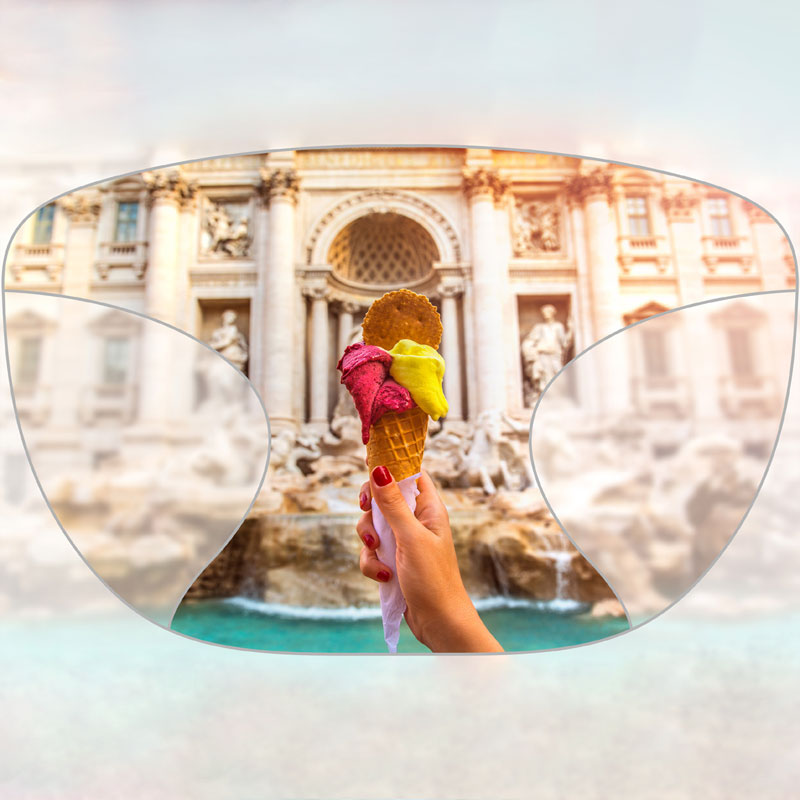 All Purpose Progressive Lens for Balanced Daily UseA versatile progressive lens offering a strong balance of distance, intermediate, and near vision, suitable for everyday activities when you prefer a single pair for most tasks.View Product →
Should I keep my old glasses in the car?
It is wise to keep an old pair for emergencies during the adaptation period. Switching back and forth constantly slows down adaptation. Use them only if you feel unsafe or if you are driving late at night before your eyes are fully comfortable with the new pair.
The Bottom Line: Driving with Progressive Lenses Is Safe Once You Prepare
Progressive lenses are not dangerous for driving. The real risk comes from wearing an unfamiliar lens design without enough adaptation time, or from a fitting that has not been measured carefully. Choose a progressive design that matches your driving habits, use an anti-reflective coating for night driving, and start with short trips before you commit to a long journey.
From a manufacturing perspective, the same prescription can feel completely different in two progressive designs. Wider corridors, free-form surface calculations, and precise fitting all contribute to road safety. If you are prepared to give your eyes a few calm days of practice, there is no reason to treat progressive lenses as a hazard behind the wheel.