

 Español


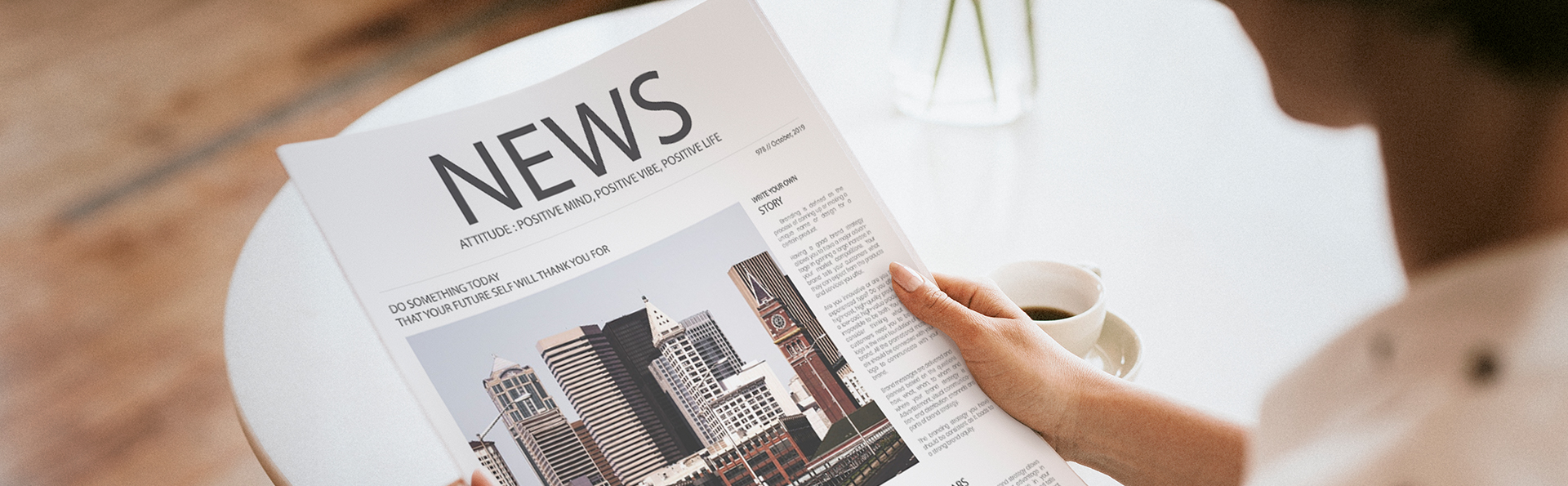
You notice it the first time you walk downstairs: the floor stays steady, the handrail looks sharp, and the book in your hand is easy to read. That moment is when progressive lenses turn from a clinical suggestion into a practical upgrade.
Progressive lenses, sometimes called multifocal lenses, are corrective lenses that combine distance, intermediate, and near power in a single lens with no visible dividing line. They are not simply stronger reading lenses; they are built differently from the ground up.
In this guide, we explain what exactly progressive lenses are, how they compare with bifocals and single vision designs, which lens types suit different activities, and what to expect during the first few days. We also look at materials, coatings, and selection details from an optical manufacturer's perspective.
If presbyopia is why you are exploring new glasses, the practical steps in this guide to switching to progressive multifocal lenses are a useful starting point.
What Exactly Are Progressive Lenses?
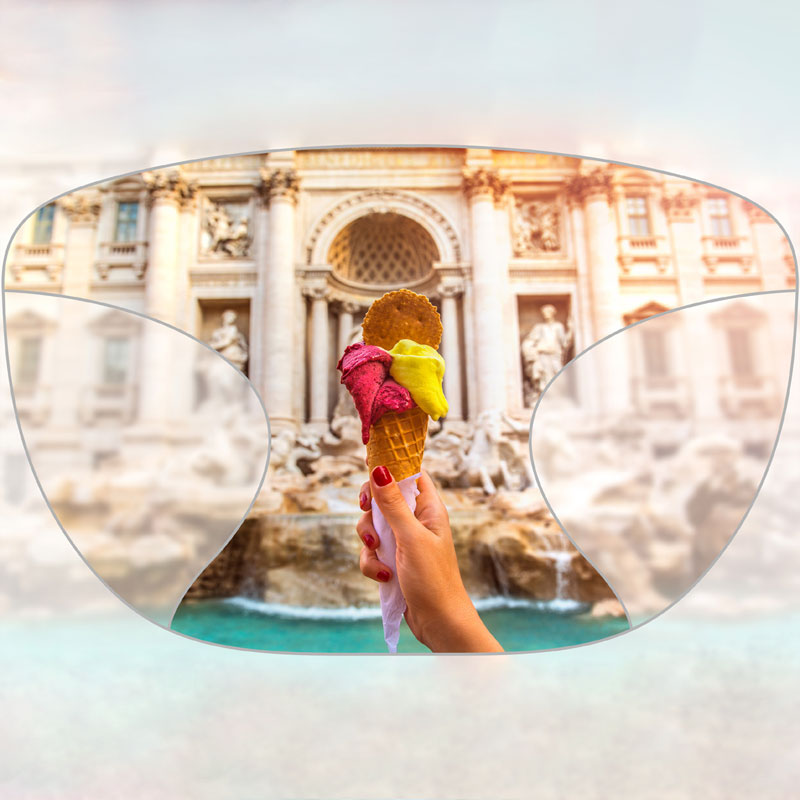
Put simply, a progressive lens is a multifocal lens whose power increases gradually from the top to the bottom. The upper part is set for distance, the middle for intermediate work such as a computer screen, and the lower area for near reading. Because the transition is continuous, there is no image jump at a segment line.
The progressive corridor is the heart of the design. A longer corridor makes intermediate vision feel smoother, while a shorter corridor allows the lens to fit into a small frame. Freeform digital surfacing, which our production line uses, calculates the optical effect at hundreds of individual points, reducing the peripheral blur that old designs left at the edges.
Single vision lenses have one focal length. Bifocals have two, with a visible line between them. Progressive lenses offer a continuous range of focal lengths, which is why they feel more natural when your eyes move between the road, the dashboard, and the rear-view mirror.
Progressive Lenses vs. Bifocals: What Changed?
For decades, bifocals were the standard answer to presbyopia. The visible segment line, however, creates a sudden jump in power every time the eye crosses it. Progressive lenses solved that problem by smoothing the change, and they are now the first choice for most new presbyopic wearers.
| Feature | Bifocal Lenses | Progressive Lenses |
|---|---|---|
| Visible line | Yes | No |
| Vision zones | Distance and near | Distance, intermediate and near |
| Intermediate vision | Not designed in | Smooth corridor for screens and dashboards |
| Image jump | Noticeable at segment | Absent in well-designed progressives |
| Frame height requirement | Rather flexible | Usually 28 mm or more |
| Adaptation | Often quick but line-aware | Short learning period for head-eye coordination |
| Cosmetic appearance | Visible line | Seamless and modern |
A modern freeform design reduces the blurred zones that older progressives left on the sides. Distortion does not disappear completely, but it moves to areas the brain learns to ignore within a few days.
Why Choose Progressive Lenses Today?
Three practical reasons explain why so many wearers now choose progressive lenses over bifocals or two separate pairs.
- One pair for every distance: Read a label, check a screen, and look across a room without switching frames.
- No visible line: The cosmetic advantage is clear, and it helps many wearers feel more confident in daily life.
- Smooth movement: Because the power change is continuous, your eyes scan naturally without jumping over a segment.
- Personalised digital optics: Freeform progressives adapt the lens to your frame and prescription, improving peripheral comfort.
Types of Progressive Lenses
Not all progressives are the same. As a lens manufacturer, we separate designs by how they balance distance, intermediate, and near zones.
| Type | Best For | Design Focus |
|---|---|---|
| Everyday / All-Purpose | General wear and first-time adapters | Balanced zones for a wide range of activities |
| Lifestyle / Driver | Driving, outdoor and walking | Expanded distance and intermediate areas |
| Occupational / Office | Desk work and reading | Extended intermediate and near zones |
| Short corridor | Shallow frame heights | Compact progression in a smaller area |
| Freeform / Custom | High prescriptions and demanding vision | Digitally personalised optics |
| Photochromic progressive | Indoor and outdoor flexibility | Adds automatic darkening to any design |
In our product programme, we group daily-use lenses into everyday, lifestyle, and occupational lines. Each shares a common base design but differs in channel length, zone weighting, and recommended fitting height.
Three designs cover most wearing habits:
 Custom All Purpose Progressive Lens with Balanced Vision ZonesThis versatile progressive design balances distance, intermediate, and near vision, making it a strong choice for daily wearers who need reliable performance across everyday activities.View Product →
 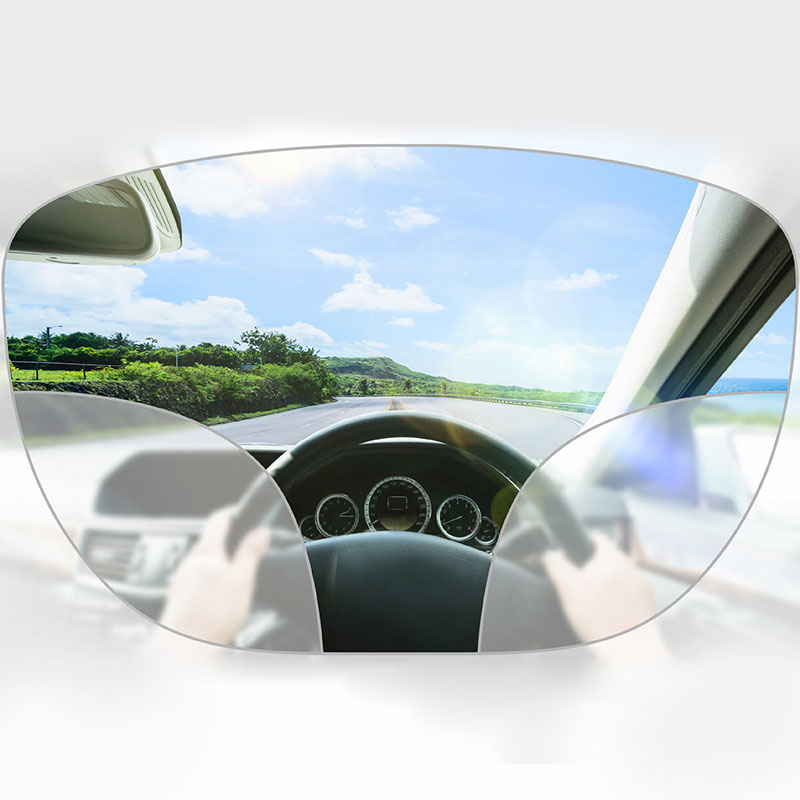 Custom Driver Progressive Lens for Wide Distance and DashboardsBuilt for driving, this progressive lens offers a wide distance area across the windshield and a clear intermediate zone for dashboard gauges, ideal for commuters and professionals.View Product →
  Custom Office Occupational Lens for Near and Intermediate WorkDesigned for desk work and tasks requiring near and intermediate focus, this lens provides a wider reading area and easier posture, suited for office and hands-on vocations.View Product →
The Adaptation Process: What to Expect
Most wearers adapt to progressives within one to two weeks. The first two days may feel strange, especially on stairs or when turning the head. That is normal: the brain is learning a new eye-head coordination pattern.
What helps during the first days:
- Wear the lenses from morning to evening; swapping back and forth slows the process.
- Point your nose at the object you want to see; do not rely on eye movement alone.
- When entering a room, look through the upper part of the lens, then lower your eyes for near details.
- Use a handrail for stairs during the first evening; depth perception recalibrates quickly.
- If most of your day happens at a desk, ask about an office or occupational design.
Most people follow a similar adaptation curve:
Lens Materials, Refractive Index, and Coatings
A progressive design is only as good as the material you cut it into. Refractive index controls thickness and weight, while coatings determine how the lens performs in daily conditions.
| Refractive Index | Characteristics | Typical Use |
|---|---|---|
| 1.50 | Economical, standard thickness | Low prescriptions where thickness is not critical |
| 1.56 | Lighter and slimmer than 1.50 | Everyday progressives with good value |
| 1.59 PC | Impact-resistant polycarbonate | Kids, sport, safety-style frames |
| 1.60 | Balanced optics and moderate thinness | Wide range of prescriptions, good all-rounder |
| 1.67 | Slimmer edge profile | Higher plus or minus prescriptions |
| 1.74 | Thinnest resin option | High prescriptions with cosmetic priority |
Coatings make the design genuinely useful. Anti-reflective coating cuts glare for night driving; blue-block coating supports long screen sessions; photochromic options darken outdoors; a super-hard coating slows scratches. Our standard HMC and SHMC options add both hardness and easy-to-clean behaviour.
Photochromic progressives combine these ideas in one lens, so you can move from a morning at the desk to an afternoon outdoors without carrying a second pair.
Frequently Asked Questions About Progressive Lenses
Are progressive lenses the same as bifocals?
No. Bifocals have a visible segment and only two power zones. Progressives provide distance, intermediate, and near vision with a seamless transition, which improves both comfort and appearance.
Will I see clearly right away?
Most people can read and see distances on the first day, but comfortable peripheral vision takes a few days to develop. Advanced freeform designs make this period shorter.
Do progressive lenses work well for computer work?
Standard progressives have an intermediate zone, but an office or occupational design shifts more of the lens towards 40-70 cm working distances. Desk users usually notice the difference immediately.
Can progressives be made in high-index or photochromic materials?
Yes. You can order them in indices from 1.50 to 1.74, and photochromic versions add automatic darkening outdoors. Blue-block and anti-reflective coatings are also available.
How long does it take to get used to progressive lenses?
Most wearers feel stable within one to two weeks. The exact time depends on frame size, prescription, and how consistently the lenses are worn. A short-corridor frame may need a little more patience.
From a manufacturer's point of view, a good progressive lens is not a single product; it is the result of optical design, precision freeform surfacing, stable coating, and honest dispensing advice. The best lens for any wearer is the one matched to the frame, the prescription, and the tasks that fill an ordinary day.
At Jiangsu Green Stone Optical, we combine CNC-controlled lens surfacing with multi-step quality inspection to deliver progressive lenses that feel reliable from the first fitting.
We hope this answer to 'what exactly are progressive lenses' gives you the confidence to choose the right design, and the clarity to enjoy the view.