

 Español



The Short Answer: HMC, SHMC and Blue-Light Coatings Are Not Peers
When a lens specification reads “1.56 single vision, HMC, SHMC, blue-light,” the three terms are not three grades of the same coating. HMC describes a hard multi-coating structure, usually a hard coat plus a multilayer anti-reflective stack. SHMC describes a super-hydrophobic multi-coating, normally an HMC-type stack with a low-surface-energy top layer. Blue-light coating describes an optical function: the lens reduces a selected portion of high-energy visible blue light. One term describes construction, one describes surface behavior, and one describes spectral performance.
That distinction matters at approval. A clear HMC lens can be an excellent anti-reflective product without any blue-light function. A blue-cut lens can carry an HMC base stack and an SHMC top layer, but the blue filter still needs its own spectral curve. SHMC does not prove blue filtration, and “blue-light” does not prove scratch resistance or easy cleaning.
| Label | What it describes | What it does not prove |
|---|---|---|
| HMC | Hard multi-coating: hard coat plus multilayer anti-reflective coating | Blue-light filtration, super-hydrophobic performance or a specific transmission curve |
| SHMC | Super-hydrophobic multi-coating: HMC-type stack with a water- and oil-repellent top layer | Blue-light blocking, a particular contact angle after wear or a specific AR color |
| Blue-light coating | Optical filter function, often defined by a spectral transmission target | Coating durability, anti-reflective quality or easy-clean performance |
What HMC Means on a Lens Specification
HMC stands for hard multi-coated. In practice, it is a coating system rather than a single chemical layer. The hard coat supports abrasion resistance and adhesion. The multilayer anti-reflective stack reduces surface reflections and raises light transmission. On a clear lens, the result should look nearly colorless, with only a faint residual reflection that depends on the design and the process.
For purchasing, “HMC” is too broad to approve on its own. Two suppliers can both claim HMC while running different layer counts, different target colors and different abrasion results. A useful approval sheet should ask for visible transmission, residual reflection color, adhesion test results and abrasion performance. Many optical buyers reference ISO 8980-4 for abrasion testing, but the test method, load and acceptance level should still be written into the purchase specification.
What HMC does well
- Reduces front-surface reflections that reduce contrast under office lighting and at night.
- Improves transmission on clear lenses without changing the prescription.
- Provides a base for adding hydrophobic, oleophobic or blue-filter functions.
- Works across common materials, including 1.56, 1.60, 1.67 and 1.74 high-index lenses.
The important limit is that HMC is not a blue-light claim. If a customer needs screen-use positioning, the order should state the blue-filter route separately from the HMC base stack.
What SHMC Adds to an HMC Stack
SHMC usually means super-hydrophobic multi-coating. It keeps the multi-layer anti-reflective construction and adds a top layer with low surface energy. Water beads up instead of spreading. Finger oil and skin residue are easier to wipe away. For wearers who clean lenses often, or for markets with humid climates and dusty environments, that top layer can improve the day-to-day experience more than a small change in reflection color.
SHMC is not a permanent property. The top layer wears with cleaning, heat and abrasion. A serious coating specification should include a contact-angle check after a defined cleaning or abrasion cycle, not only a fresh-sample measurement. A fresh SHMC lens may show a high contact angle, while the same lens after repeated wiping may lose part of that performance.
Where SHMC pays off
Premium progressive lenses, high-index lenses with wide edges, humid markets, frequent-cleaning habits and retail programs where “easy to clean” is part of the offer.
Where it needs care
Poor packaging, rough cleaning cloths and aggressive solvents can shorten top-layer life. A strong SHMC claim should be supported by packing and handling controls.
What to request
Contact angle, oil-repellency result, steel-wool or tape-adhesion data, cleaning-cycle records and a clear statement of which top layer is used.
Blue-Light Coatings Are a Function, Not a Durability Grade
A blue-light coating is specified by what it does to the spectrum. It may reflect blue light through a coating stack, absorb it through the lens material or use a hybrid route. The label alone does not tell a buyer the cut-on wavelength, the transmission at 450 nm, the residual color or whether the effect comes from the coating or the substrate. Those details belong in the technical file.
This is also why a blue-light lens can still be an HMC lens. The blue filter can sit inside or above the anti-reflective stack, and an SHMC top layer can be added for cleaning. The reverse is not true: an SHMC lens with no blue-filter design should not be sold as blue-light protection. Buyers comparing a clear HMC sample with a blue-cut sample should ask for a spectral curve for both, not judge by the blue reflection alone.
For a closer look at how the function is described at product level, see this discussion of blue-light coating on single-vision lenses. The key purchasing point is that the term “blue-light” needs a numerical target. A useful target might be average transmission from 380 nm to 500 nm, a stated transmission at 450 nm, or a UV420 cut-off when UV protection is part of the claim.
Side-by-Side Comparison for Coating Approval
The table below is a practical comparison for a lens order, not a ranking. A premium lens may combine all three: an HMC base, a blue-filter function and an SHMC top layer. The buyer’s job is to separate the claims so that each one can be tested.
| Attribute | HMC | SHMC | Blue-light coating |
|---|---|---|---|
| Primary purpose | Reduce reflections and improve transmission | Improve water and oil repellency; easier cleaning | Reduce selected high-energy visible blue light |
| Typical stack position | Hard coat plus AR layers on the lens surface | HMC-type stack plus hydrophobic top layer | Coating layer, lens material or hybrid design |
| Visual sign | Faint green, blue or other residual reflection | Similar reflection color; water beads on the surface | May show a blue or violet reflection, or a slight tint |
| Main risk | Supplier variation in layer design and abrasion | Top-layer wear after cleaning cycles | Unclear spectral target or too much color shift |
| Useful approval data | Transmission, adhesion, abrasion, reflection color | Contact angle, oil repellency, cleaning-cycle result | Spectral curve, transmission at 450 nm, residual color |
How the Three Labels Interact in a Real Lens Order
A realistic order might read: “1.60 single vision, clear, HMC with blue-filter function and SHMC top layer.” That is a different product from “1.60 single vision, HMC only.” The first order needs a spectral curve, a top-layer specification and a base AR specification. The second order needs only the clear AR and durability criteria unless blue filtration is added elsewhere.
A simple way to visualize the emphasis is to separate the lens into functions. The chart below is illustrative, not a measured spectral graph. It shows which claim a buyer is emphasizing when each label appears in a specification.
In a combined product, the purchasing document should not collapse the three claims into one word. Keep the base coating, the top layer and the filter function on separate lines. That structure reduces disputes when a shipment is checked for reflection color, cleaning performance or blue transmission.
Buyer Checks Before Approving a Coating
- Request a spectral transmission curve. A blue-light claim without a curve is difficult to compare. Ask for data from 380 nm to 500 nm and a stated value at 450 nm.
- Confirm the filter route. Coating-based, in-material and hybrid blue filters behave differently in thickness, tint and processing. The route should match the lens platform.
- Agree on residual color. A blue filter can shift the reflected color. Set a b* tolerance or a visual reference sample, for example a small shift around the approved master.
- Test adhesion and abrasion. HMC and SHMC both depend on layer adhesion. Ask for tape-adhesion and abrasion records on the actual lens material and coating line.
- Check contact angle after cleaning. A fresh SHMC sample is not enough. Request results after a defined wiping or abrasion cycle.
- Match the coating to the refractive index. A 1.56 lens, a 1.60 lens and a 1.74 lens can need different process windows. Do not assume one coating recipe transfers unchanged across the range.
- Review lot-to-lot records. Coating color, transmission and hydrophobic performance should be monitored as a process, not as a one-time sample.
A blue-light torch test is not a substitute for these checks. It can show that a lens reflects some blue light, but it does not show the transmission curve, the durability of the coating or whether the lens meets an agreed blue-filter target.
Matching HMC, SHMC and Blue-Light Options to Product Platforms
For a standard clear single-vision program, HMC on 1.56 material is a practical base. It gives the wearer a clear anti-reflective lens with a familiar process window, and it keeps the cost structure suitable for volume stock programs. A 1.56 clear single-vision lens with HMC or SHMC is a sensible starting point when the order does not require blue filtration.
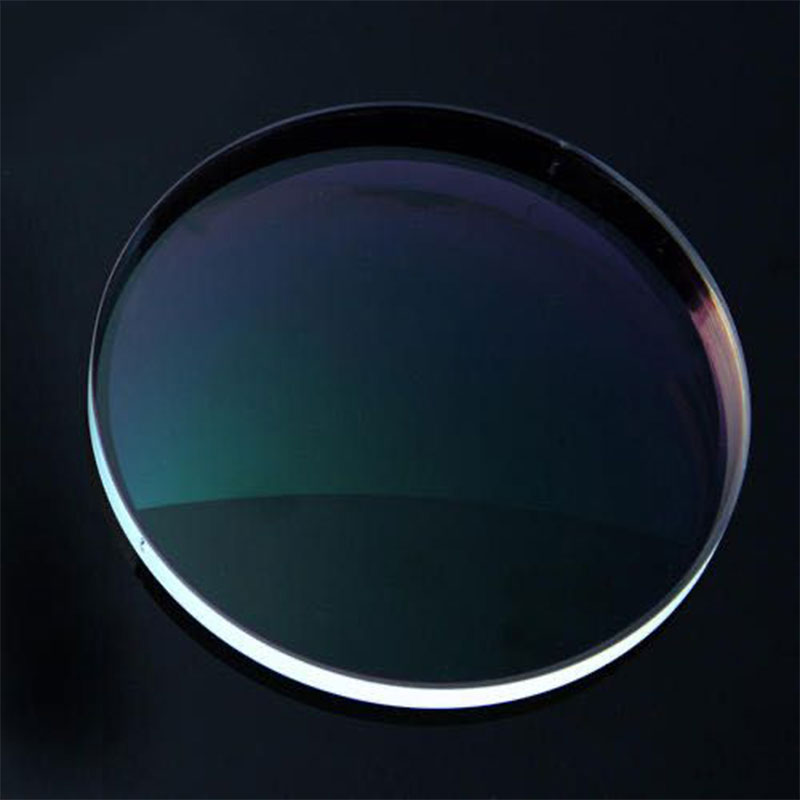 1.56 Clear Single-Vision Lens with HMC/SHMCA clear resin single-vision lens with HMC/SHMC coating options, refractive index 1.56, and a power range suited to everyday prescription eyewear and volume stock programs.View Product →
For screen-heavy customers, a blue-block single-vision lens with an HMC or SHMC stack is easier to position when the spectral target is written down. The product should be approved on transmission and color, not only on the visible blue reflection. A 1.56 blue-block lens with HMC or SHMC can serve everyday prescriptions, while higher-index versions help keep thickness under control.
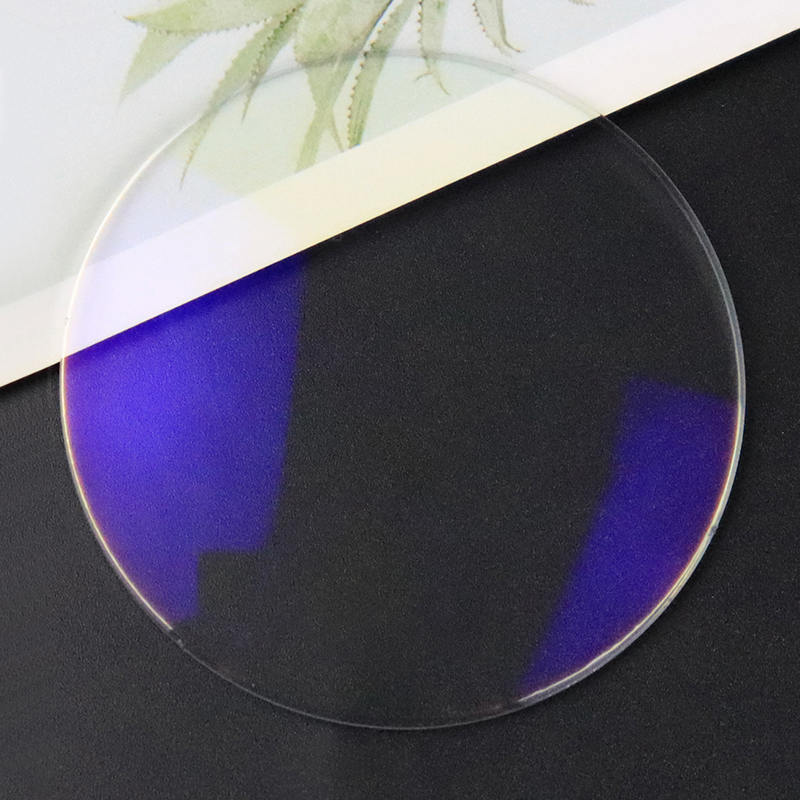 1.56 Blue Block Lens with HMC/SHMC CoatingA stock blue-block resin lens with HMC/SHMC coating choices and power range for screen-heavy everyday prescriptions, positioned between clear single-vision and higher-index blue-filter options.View Product →
For high minus prescriptions, a 1.74 blue-block lens with SHMC can combine thin edges with easy-clean performance and a defined blue-filter function. This is the type of platform where buyers should confirm that the coating process is validated on the high-index substrate, because edge thickness, tint and coating appearance are easier to see in strong prescriptions.
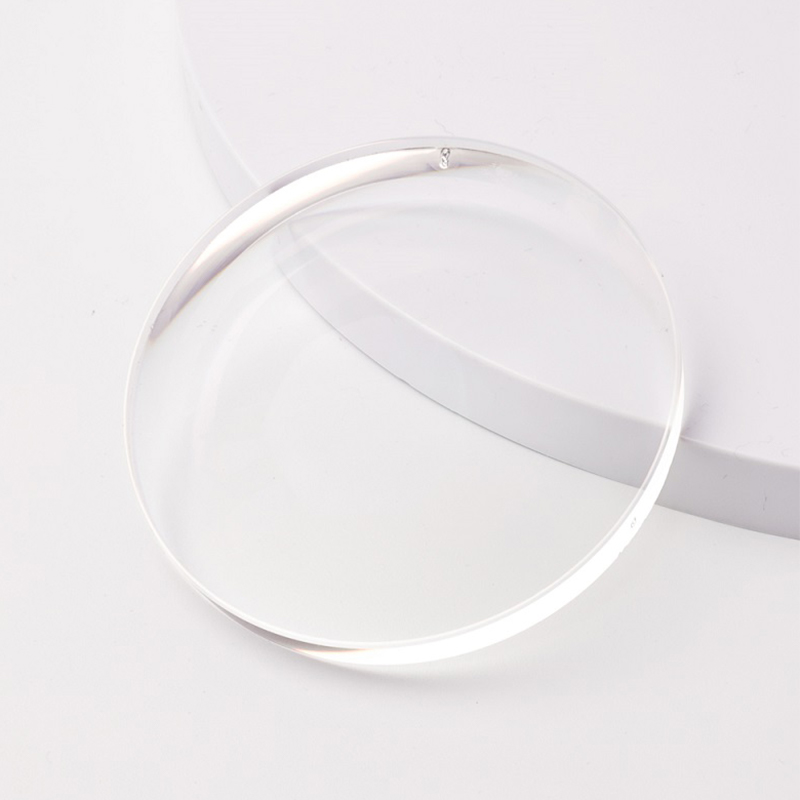 1.74 Blue Block Lens with SHMC CoatingA high-index clear resin blue-block lens with SHMC coating and a minus power range, offering thinner edges and easy-clean surface performance for strong prescriptions.View Product →
Green Stone supplies HMC and SHMC options across multiple lens families, including single-vision, progressive, photochromic and blue-block products. The practical selection rule is simple: choose HMC for the anti-reflective base, choose SHMC when cleaning and surface repellency are part of the offer, and choose a blue-light option only when the spectral target and approval method are clear.
Common Specification Mistakes
- Treating SHMC as a blue-light grade. SHMC describes the top layer, not the spectral filter.
- Using “HMC” as a complete quality standard. HMC still needs transmission, adhesion and abrasion criteria.
- Approving blue-light lenses by reflection color only. The transmission curve and the filter route matter more than the visible tint.
- Ignoring the lens material. A coating that performs on 1.56 may need adjustment on 1.60, 1.67 or 1.74.
- Forgetting packaging. A good SHMC top layer can be damaged by poor packing, rough cleaning cloths or long storage in adverse conditions.
FAQ: HMC, SHMC and Blue-Light Coatings
Is SHMC better than HMC?
SHMC is not automatically “better” in every respect. It adds a super-hydrophobic top layer, which usually improves cleaning and water repellency. HMC remains the anti-reflective base. A well-made HMC lens can be more suitable than a weak SHMC lens if the top layer is not durable.
Does HMC block blue light?
No, not by definition. HMC is a hard multi-coating with anti-reflective layers. Some HMC lenses may show a faint residual color, but that is not a blue-filter specification. A blue-light claim needs its own transmission target.
Can a lens be both SHMC and blue-light?
Yes. A lens can use a blue-filter route and an SHMC top layer. The purchase order should list the blue-filter target and the SHMC top-layer requirement separately so that both can be checked.
Is blue-light coating the same as anti-glare coating?
No. Anti-glare, or anti-reflective, coating reduces surface reflections across the visible spectrum. A blue-light coating is designed to reduce a selected blue-light range. A lens can have both functions, but one does not automatically provide the other.
What should I send with a coating inquiry?
Send the lens material and refractive index, prescription range, coating name, blue-filter target if required, residual color reference, abrasion standard, contact-angle requirement for SHMC and the packaging format. A clear target reduces sample rounds and approval disputes.
Can a blue-light torch prove the coating is genuine?
No. A torch can show that some blue light is reflected, but it does not measure the transmission curve, the coating durability or the actual blue-filter performance. Use spectral data and agreed test methods.
Practical Purchase-Order Wording
A clear order line can prevent most confusion. Instead of writing only “HMC/SHMC blue,” separate the functions in the specification. The exact values should be agreed with the supplier, but the structure can look like this:
Lens: 1.60 single vision, clear
Base coating: HMC, residual color to approved master
Top layer: SHMC, contact angle and cleaning-cycle result to approved specification
Blue function: blue-filter target at 450 nm and transmission curve from 380 nm to 500 nm
Durability: adhesion and abrasion test report on the same material and coating line
Packaging: lens bags and cartons specified to protect the hydrophobic top layer
This wording keeps HMC, SHMC and blue-light claims visible without mixing them into a single ambiguous label. It also gives the coating line a measurable target and gives the buyer a fair basis for incoming inspection.